Introduction: A Digital Arena of Competition
In the last two decades, the gaming world has transformed from simple leisure activity to a multi-billion-dollar global phenomenon known as Esports. What was once dismissed as a pastime for teenagers has evolved into a competitive, organized, and professional ecosystem that rivals traditional sports in viewership, investment, and cultural impact. The modern Esports industry has become a dynamic blend of technology, entertainment, athleticism, and strategy. It’s no longer about playing games for fun — it’s about playing to win, to perform, and to inspire millions.
The Early Beginnings of Competitive Gaming
The origins of Esports trace back to the early 1970s when students at Stanford University held a “Spacewar!” tournament. This small event planted the seed for competitive gaming, but it wasn’t until the 1980s that video games began entering public consciousness. Titles like Pac-Man, Donkey Kong, and Street Fighter gave birth to high-score competitions and arcade rivalries. In 1990, Nintendo hosted the Nintendo World Championships, one of the first large-scale gaming competitions. Though modest compared to today’s grand events, it signaled that gaming could be more than recreation — it could be sport.
The Internet Era: A New Playing Field
The arrival of the internet in the 1990s and early 2000s completely reshaped the gaming landscape. Multiplayer games like Quake, Counter-Strike, and StarCraft introduced real-time competition on a global scale. Players could now face opponents from other continents without leaving their homes. This was the birth of the online competitive culture — a foundation for Esports as we know it today. LAN tournaments became popular, with gamers gathering in local venues to compete in person. These events created communities and cultures that nurtured the competitive spirit, paving the way for future global tournaments.
The Defining Decade: 2010s and the Professionalization of Esports
The 2010s were the decade Esports officially went mainstream. Streaming platforms like Twitch and YouTube Gaming brought live competitions to audiences worldwide. Suddenly, players weren’t just participants — they were entertainers. Esports teams gained sponsorships from major brands, and players began earning salaries comparable to traditional athletes. Titles such as League of Legends, Dota 2, Counter-Strike: Global Offensive, and Overwatch dominated the Esports scene. Prize pools soared into the millions, with The International for Dota 2 breaking records year after year. Stadiums filled with roaring fans, and online viewership reached tens of millions. Esports was no longer underground — it was a legitimate form of entertainment.
Esports Titles That Shaped the Industry
Different genres have contributed to the growth of Esports. Each brings its own flavor of strategy, skill, and excitement. MOBA (Multiplayer Online Battle Arena) games like League of Legends and Dota 2 focus on teamwork, coordination, and tactical decision-making. First-Person Shooters (FPS) such as Counter-Strike and Valorant highlight precision, reflex, and team synergy. Battle Royale titles like Fortnite and PUBG emphasize survival instincts and adaptability, appealing to massive online audiences. Sports simulations like FIFA and NBA 2K bridge the gap between digital and real-world sports. The diversity of games has expanded Esports’ reach, allowing players and viewers to find niches that resonate with their interests.
The Global Expansion of Esports
Esports is not bound by borders. Asia, particularly South Korea, has been a powerhouse in professional gaming for decades. The country’s infrastructure, cultural acceptance, and early government recognition made it the epicenter of Esports. StarCraft professionals became national celebrities. Meanwhile, China rapidly developed its own competitive scene, producing world-class teams in League of Legends and Honor of Kings. North America and Europe followed suit, investing heavily in Esports organizations, training facilities, and collegiate programs. Today, countries from South America to Africa are nurturing competitive gaming ecosystems, demonstrating that Esports has truly become a global language of digital competition.
The Business Behind the Screens
The business model of Esports has matured significantly. Revenue comes from sponsorships, media rights, advertising, ticket sales, and in-game purchases. Corporations see Esports as a prime marketing opportunity to reach younger, digitally-native audiences. Brands like Intel, Red Bull, Coca-Cola, and BMW have invested millions in Esports partnerships. Esports organizations such as T1, Cloud9, and Fnatic operate like traditional sports clubs, with professional management, coaching staff, and branding departments. The rise of franchised leagues — like the Overwatch League and Call of Duty League — mirrors the structure of the NFL or NBA, with city-based teams and seasonal competitions. This professional framework has brought credibility, stability, and mainstream acceptance to the Esports ecosystem.
The Rise of Streaming and Content Creation
Streaming has been one of the most important forces behind Esports’ success. Platforms such as Twitch, YouTube, and Facebook Gaming turned players into influencers and community leaders. Streamers not only play games but also interact directly with fans, fostering personal connections and loyalty. This blend of entertainment and engagement turned Esports into a spectator sport. Viewers don’t just watch for the competition — they watch for the personalities, the drama, and the storytelling. The symbiotic relationship between Esports and streaming ensures that content is constantly being produced, shared, and monetized.
The Role of Technology and Innovation
Technology is the beating heart of Esports. High-performance gaming PCs, low-latency internet connections, and cutting-edge graphics have made competitive gaming smoother and more accessible. Advances in software and hardware optimization have minimized lag, ensuring fair play. Virtual reality (VR) and augmented reality (AR) are opening new frontiers for immersive Esports experiences. Meanwhile, artificial intelligence (AI) and data analytics are being used to enhance player training, strategy, and scouting. From cloud gaming to 5G networks, every technological innovation contributes to making Esports faster, fairer, and more engaging.
Training Like Traditional Athletes
The stereotype of the lazy gamer is long outdated. Modern Esports professionals follow rigorous training schedules that mirror those of athletes. They practice for 8–12 hours a day, focusing on reflexes, communication, and strategic execution. Teams hire coaches, analysts, nutritionists, and psychologists to ensure players maintain peak performance both mentally and physically. Reaction times, decision-making speed, and teamwork are honed through repetition and analysis. Mental resilience and composure under pressure are critical traits that separate champions from the rest. The discipline behind Esports proves that it requires not only skill but also endurance, focus, and dedication.
Esports Arenas and Events: The New Colosseums
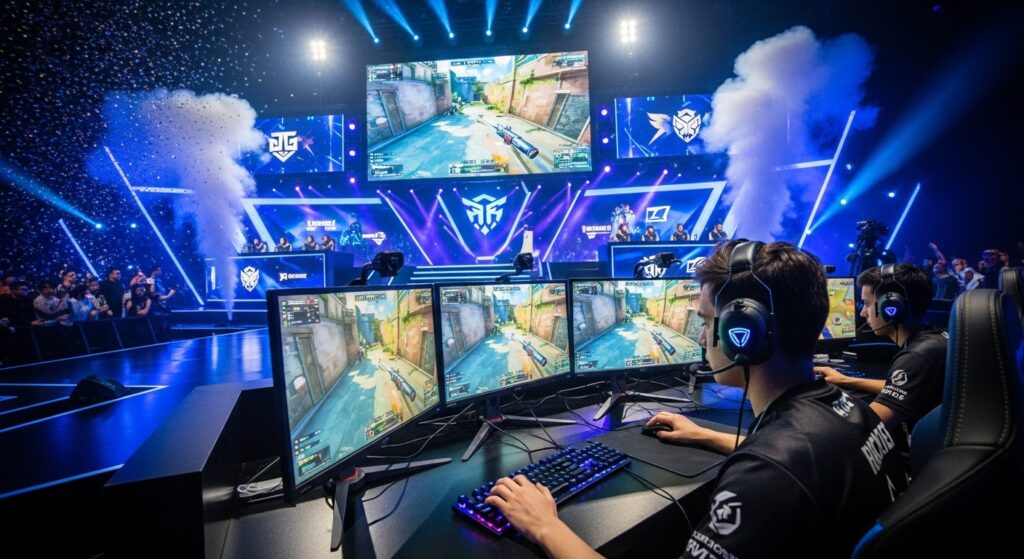
Gone are the days when tournaments were confined to basements and LAN cafes. Esports now fills arenas once reserved for concerts and sports finals. Iconic venues like Madison Square Garden, Staples Center, and Shanghai Stadium have hosted Esports championships attended by tens of thousands of fans. The energy of a live audience chanting for their favorite teams mirrors the excitement of any major sporting event. Massive LED screens, live commentary, pyrotechnics, and choreographed openings create a spectacle that fuses sports, music, and theater. Esports has proven that it can rival traditional entertainment in spectacle and passion.
The Esports Ecosystem: Teams, Leagues, and Communities
The Esports ecosystem is vast and interconnected. At the top are professional organizations and leagues that manage teams and tournaments. Below them lies the semi-professional scene, where aspiring players hone their skills in regional competitions. Grassroots communities, online ladders, and amateur circuits serve as the breeding ground for new talent. Fans, content creators, shoutcasters, and analysts all contribute to a thriving culture that extends beyond competition. This layered structure ensures a constant flow of new players, ideas, and excitement, keeping the industry dynamic and sustainable.
The Impact of Esports on Society
Esports has redefined entertainment, communication, and even education. Schools and universities worldwide are introducing Esports programs, offering scholarships to talented players. This legitimization of gaming has changed public perception, proving that video games can foster teamwork, leadership, and critical thinking. Esports also plays a role in social connection — people from different backgrounds, languages, and cultures unite through shared passion. Moreover, Esports provides opportunities for careers in broadcasting, marketing, coaching, and event management, expanding its influence beyond gameplay.
The Challenges Esports Faces
Despite its success, Esports is not without challenges. Issues such as player burnout, inconsistent regulation, and lack of standardized governance remain significant. The young age of many professional players raises concerns about education, health, and long-term career security. Match-fixing, cheating, and online toxicity occasionally tarnish the industry’s reputation. Moreover, unequal regional access and gender disparities limit inclusivity. Addressing these problems requires collaboration between organizers, developers, and governing bodies to create ethical standards, player unions, and support systems that protect participants.
The Role of Media and Mainstream Acceptance
Traditional media once ignored gaming, but now it competes for broadcasting rights. Major networks air Esports tournaments, and documentaries explore the stories behind players and teams. Celebrities and athletes are investing in Esports organizations, bridging the gap between digital and physical sports. The inclusion of Esports as a demonstration event in the Asian Games and discussions around its inclusion in the Olympics further validate its global stature. Mainstream media’s embrace has helped dispel stereotypes and highlight the artistry, skill, and dedication required to compete at the highest level.
Women in Esports: Breaking Barriers
For a long time, Esports has been male-dominated, but women are steadily making their mark. Female players, casters, and organizers are challenging biases and proving that gaming excellence knows no gender. Organizations and movements promoting inclusivity are empowering more women to participate without fear of discrimination. Games like Valorant have introduced women-only circuits to encourage representation and growth. The future of Esports lies in diversity — an environment where anyone, regardless of gender or background, can compete and thrive.
The Future of Esports
The future of Esports is bright and full of potential. As technology advances, the line between physical and digital sports continues to blur. Metaverse platforms may soon host fully immersive Esports events where players and fans interact in virtual spaces. Mobile gaming, already dominant in Asia, will continue to democratize access, allowing anyone with a smartphone to compete globally. The integration of blockchain, NFTs, and digital economies could further enhance fan engagement through unique collectibles and virtual ownership. Education systems will increasingly integrate Esports as a legitimate discipline, and traditional sports teams will continue to invest in gaming divisions. With more countries recognizing Esports as an official sport, global tournaments could eventually rival the World Cup in scale and prestige.
Esports and Cultural Influence
Esports has become more than competition — it’s a cultural movement. It influences fashion, music, and entertainment. Players are icons, and game characters are as recognizable as movie stars. Collaborations between gaming and mainstream culture — from music videos to apparel — have made Esports a cornerstone of modern youth identity. The digital age celebrates community, and Esports represents the ultimate global community — connected, passionate, and constantly evolving.
Conclusion: Beyond the Game
Esports stands at the intersection of technology, art, and human ambition. It reflects how far society has come in embracing new forms of expression and competition. What began as small tournaments in dorm rooms has become a global spectacle watched by millions. Esports unites people across continents, languages, and generations. It challenges traditional definitions of sport, entertainment, and culture. In this ever-changing digital landscape, Esports continues to prove one undeniable truth — the future of competition is not only on the field or in the ring; it’s on the screen, in the hearts and minds of gamers worldwide.



More Stories
Pixels to Podiums: The Evolution of Esports in the Modern Era
Pixels to Powerhouses: How Esports Redefined Competition in the Digital Age
Pixels to Powerhouses: How Esports Redefined Competition in the Digital Age