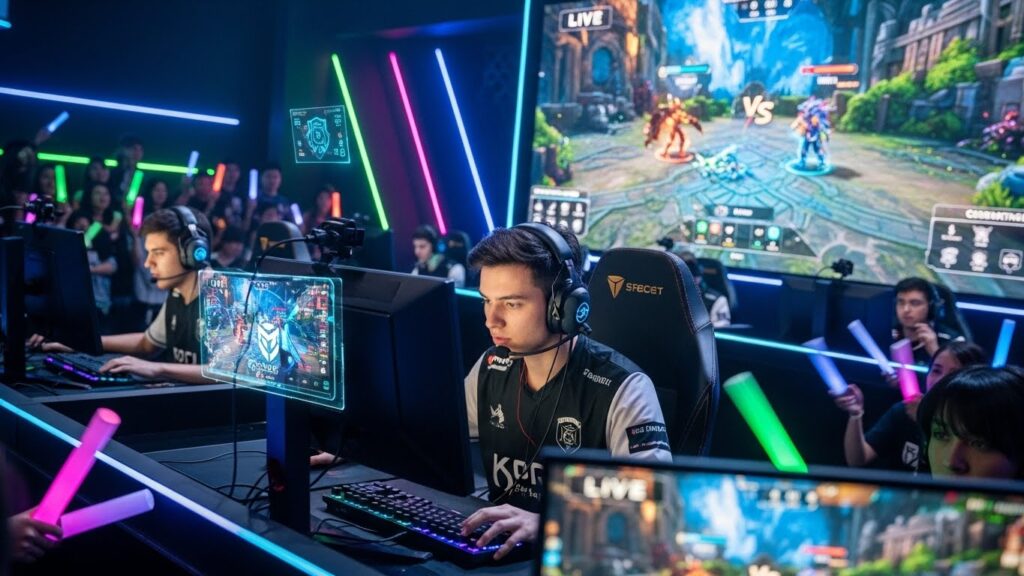
Introduction: A New Arena Is Born
Competition has always been at the heart of human culture. From ancient athletic contests to modern professional sports, people have gathered to test skill, strategy, and endurance. In the last two decades, a new arena has emerged that has quietly grown into a global phenomenon: esports. What once seemed like casual video game sessions among friends has transformed into packed stadiums, million-dollar tournaments, and careers that rival traditional sports in prestige and influence. Esports is no longer just entertainment; it is a cultural, economic, and technological force reshaping how the world understands competition.
The Evolution of Esports
Esports did not appear overnight. Its roots can be traced back to early arcade competitions where players competed for high scores and bragging rights. As home computers and gaming consoles became more accessible, competitive gaming moved into living rooms and local gatherings. The rise of the internet was the turning point. Online multiplayer games allowed players from different countries to compete in real time, creating communities that transcended borders.
As games became more complex and skill-based, organized tournaments began to form. Prize pools grew, sponsorships appeared, and professional teams emerged. What started as niche events slowly gained mainstream attention, especially as streaming platforms allowed millions of viewers to watch competitions live. Today, esports stands as a fully developed industry with its own leagues, seasons, and global fan base.
What Defines Esports?
Esports is more than simply playing video games competitively. It is defined by structured competition, professional players, and organized tournaments. Players train rigorously, often practicing for many hours a day to master mechanics, strategies, and teamwork. Coaches, analysts, and support staff work behind the scenes to refine performance, just as they do in traditional sports.
Another defining feature of esports is its diversity of genres. From fast-paced shooters to strategy-heavy multiplayer games and sports simulations, esports encompasses a wide range of competitive experiences. This diversity allows fans with different interests to find games they connect with, contributing to the rapid growth of the industry.
The Rise of Professional Players
Professional esports players are often misunderstood as casual gamers who turned their hobby into a job. In reality, the demands placed on them are intense. High-level competition requires exceptional reflexes, mental focus, and decision-making under pressure. Players must constantly adapt to updates, new strategies, and evolving competition.
Many professional players begin their careers at a young age, dedicating years to refining their skills. They face challenges similar to traditional athletes, including burnout, performance anxiety, and short career spans. Despite these pressures, successful players can achieve global recognition, financial stability, and influence that extends beyond gaming.
Teams, Organizations, and Infrastructure
Behind every successful player is an organization that provides structure and support. Esports teams operate much like traditional sports franchises. They recruit talent, manage contracts, provide training facilities, and handle marketing and sponsorships. Some organizations have become global brands, attracting fans who support teams across multiple games.
Training environments have evolved significantly. Many teams now operate dedicated facilities equipped with high-end technology, fitness areas, and spaces for strategy sessions. Physical health, once overlooked, is increasingly recognized as essential for peak performance. Nutrition, exercise, and mental well-being are now integral parts of professional esports training.
The Role of Technology
Technology is the backbone of esports. Advances in hardware, software, and internet infrastructure have made high-level competition possible on a global scale. Powerful computers, responsive peripherals, and stable online connections ensure that matches are fair and precise. Even minor technological improvements can have a significant impact on competitive outcomes.
Streaming technology has also played a crucial role. It allows fans to watch matches live, interact with commentators, and engage with players in real time. This level of accessibility has helped esports grow rapidly, turning competitions into shared global experiences rather than isolated events.
Esports as Entertainment
One of the reasons esports has gained such widespread popularity is its entertainment value. Matches are fast-paced, unpredictable, and often visually spectacular. Commentators break down complex strategies, making games accessible to both experienced players and newcomers. Storylines develop around rivalries, underdog victories, and legendary performances, keeping fans emotionally invested.
Esports events are also designed as immersive experiences. Large-scale tournaments feature dramatic stage designs, live audiences, and professional production values. Even viewers watching from home can feel the excitement, thanks to high-quality broadcasts and engaging presentation.
Economic Impact and Career Opportunities
The esports industry has grown into a significant economic force. Revenue streams include sponsorships, advertising, merchandise, ticket sales, and media rights. This growth has created a wide range of career opportunities beyond playing professionally. Roles in management, event production, marketing, broadcasting, and game development are now common within the industry.
For many young people, esports represents a new pathway to success in the digital economy. Universities and educational institutions have begun to recognize this potential, offering programs related to esports management, game design, and digital media. This integration into formal education further legitimizes esports as a serious field of study and work.
Cultural Influence and Global Reach
Esports has a unique ability to connect people across cultures. Players and fans from different countries compete and interact on equal footing, united by a shared passion. This global nature has helped esports become a cultural bridge, fostering understanding and collaboration among diverse communities.
The influence of esports extends into fashion, music, and social media. Players become influencers, shaping trends and conversations beyond gaming. Events are often accompanied by performances, collaborations, and creative expressions that blend gaming culture with broader entertainment industries.
Challenges Facing Esports
Despite its success, esports faces several challenges. Player health and well-being remain ongoing concerns, as long practice hours and intense competition can take a toll. Ensuring fair play is another critical issue, with organizers constantly working to prevent cheating and maintain competitive integrity.
Sustainability is also a key question. As the industry grows rapidly, maintaining long-term stability requires careful management, consistent governance, and responsible investment. Balancing commercial interests with the needs of players and fans will determine how esports evolves in the coming years.
The Future of Esports
Looking ahead, the future of esports appears promising. Technological innovations such as virtual reality and augmented reality could create entirely new forms of competitive gaming. Improved accessibility may allow more players and fans to participate, further expanding the community.
Esports is also likely to continue integrating with traditional sports and mainstream entertainment. Collaborations, shared venues, and cross-industry partnerships are becoming more common. As perceptions change, esports may one day be viewed not as an alternative to traditional sports, but as an equally respected form of competition.
Conclusion: More Than Just a Game
Esports represents a profound shift in how competition, entertainment, and community are experienced in the digital age. It has transformed video games into a global stage where skill, strategy, and passion collide. For players, fans, and industry professionals alike, esports offers opportunities that were unimaginable just a generation ago.
As technology continues to evolve and cultures become increasingly interconnected, esports will remain at the forefront of digital innovation. It is more than just a game; it is a reflection of how the world competes, connects, and creates meaning in a rapidly changing era.



More Stories
Pixels to Podiums: The Evolution of Esports in the Modern Era
Pixels to Powerhouses: How Esports Redefined Competition in the Digital Age
Pixels to Powerhouses: How Esports Became a Global Competitive Culture