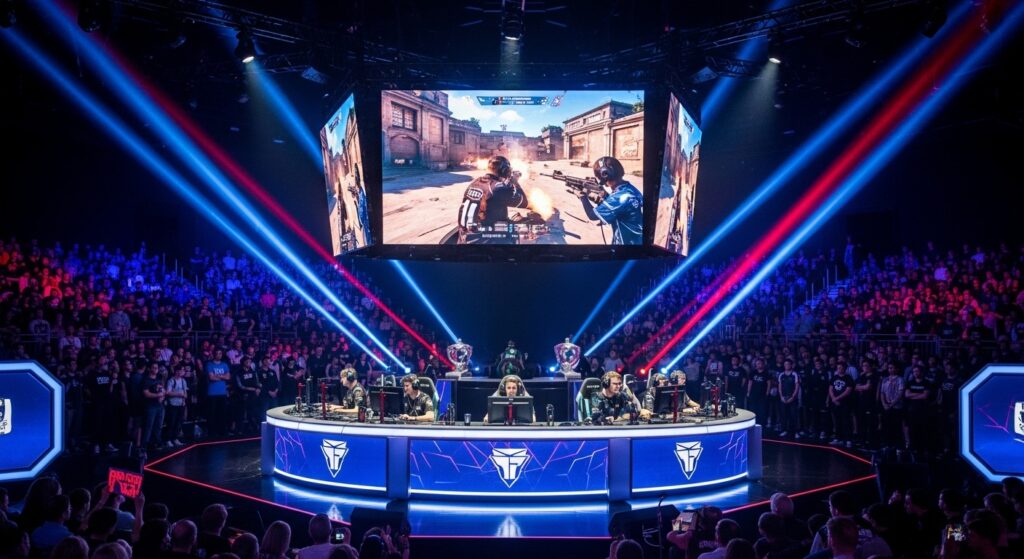
Esports, short for electronic sports, is more than just a competitive hobby; it’s a global industry that has evolved into a multi-billion-dollar ecosystem. Over the past two decades, esports has transformed from a niche activity for gamers into a mainstream form of entertainment that rivals traditional sports in viewership and fan engagement. This blog explores the history, evolution, cultural impact, and future of esports, offering a deep dive into how it has changed the way we think about gaming and competition.
The Origins of Esports
Esports may seem like a modern-day creation, but its roots stretch back to the early 1970s. The first organized gaming competition occurred in 1972 at Stanford University, where the game Spacewar was the focal point of a tournament. The prize was a year’s subscription to Rolling Stone magazine, which might seem insignificant now but was groundbreaking for its time. These early competitions, although small in scale, laid the groundwork for the growth of esports as a legitimate form of competition.
In the following decades, video games like Pac-Man, Street Fighter, and Doom sparked the idea of competitive gaming. However, it wasn’t until the late 1990s and early 2000s that esports began to grow significantly. Games such as Quake, StarCraft, and Warcraft III were pivotal in pushing esports into the limelight. Major tournaments were held in South Korea, where the competitive gaming culture really took off, especially with the rise of StarCraft: Brood War as a national sport.
The Rise of Esports as a Professional Industry
By the 2000s, esports began to emerge as a full-fledged professional industry. The formation of major esports organizations, such as Team Liquid and Fnatic, marked the start of a more structured and formalized scene. This period also saw the rise of major competitive games, such as Counter-Strike, Dota, and League of Legends, which provided the foundation for the competitive landscape we know today.
As these games garnered a larger following, esports tournaments began to draw bigger crowds. The World Cyber Games (WCG), founded in 2000, became one of the first global esports events, drawing participants from around the world. The ESL (Electronic Sports League), established in 2000 as well, grew into one of the most influential esports organizations, holding competitions in multiple countries and for multiple games.
However, it was League of Legends (LoL), released in 2009 by Riot Games, that really helped bring esports into the mainstream. The annual League of Legends World Championship attracted millions of viewers worldwide and marked a turning point for the industry. This period also saw a surge in sponsorships, media deals, and professionalization, as organizations started to take esports more seriously and invested heavily in player development, team management, and infrastructure.
Esports in the Modern Era: A Multi-Billion-Dollar Industry
Fast forward to the 2010s and 2020s, and esports has grown into a multi-billion-dollar industry with a global audience. The major esports titles, such as League of Legends, Dota 2, Counter-Strike: Global Offensive (CS:GO), and Fortnite, are now household names. These games have become the foundation for professional esports leagues and tournaments, which often feature large cash prizes, sponsorships from top-tier brands, and media rights deals.
The growth of streaming platforms such as Twitch and YouTube Gaming has played a significant role in this growth, offering a platform for gamers to showcase their skills and build a fanbase. Twitch, in particular, has become synonymous with gaming content, boasting millions of viewers and streamers. As of recent years, esports events have generated viewership comparable to traditional sports leagues like the NBA and NFL.
Some of the biggest events in esports now rival major traditional sporting events in terms of size, scope, and revenue. For example, The International (TI), an annual Dota 2 tournament, has grown to be one of the richest tournaments in all of esports, with prize pools often exceeding $30 million. The League of Legends World Championship also attracts millions of viewers, and esports betting has become a growing industry on its own.
Esports as a Mainstream Entertainment Form
Esports has not only evolved into a professional industry but has also gained recognition as a legitimate form of entertainment. This transformation has been aided by its increasing mainstream appeal, as esports tournaments are now broadcast on major TV networks, including ESPN, and live-streamed on platforms like YouTube and Twitch. Companies such as Coca-Cola, Intel, and Red Bull have signed sponsorship deals with top esports organizations, recognizing the vast potential in this rapidly growing market.
Additionally, esports has found a place in the educational system. Many high schools, colleges, and universities have established esports programs, offering scholarships and degrees in esports management. The National Association of Collegiate Esports (NACE), founded in 2016, oversees collegiate esports competitions, further legitimizing esports as an accepted form of competitive sport.
Esports has even made its way into the Olympics conversation. The International Olympic Committee (IOC) has discussed the possibility of including esports in future Olympic Games, acknowledging the growing popularity of gaming as a form of competition. This is a monumental shift in how esports is perceived, showing that it is on the verge of being accepted as an official form of sport.
The Role of Technology in Esports
The growth of esports has been closely tied to advancements in technology. High-speed internet connections, the development of better gaming hardware, and improved software platforms have made it possible for competitive gaming to thrive. The ability to play games online against opponents from all over the world has been one of the key factors in the rise of esports, allowing players and fans to engage in the competitive scene from the comfort of their own homes.
Streaming technology, for example, has made it possible for fans to watch esports tournaments live from anywhere in the world. Tools like OBS (Open Broadcaster Software) have allowed streamers and organizations to produce high-quality content that can be broadcast seamlessly. Additionally, the rise of VR (Virtual Reality) and AR (Augmented Reality) technologies has the potential to redefine the future of esports, offering new forms of immersive gaming experiences for both players and spectators.
The Global Impact of Esports
One of the most fascinating aspects of esports is its global reach. Unlike traditional sports, which are often confined to specific regions or countries, esports has become a truly international phenomenon. Esports tournaments take place all over the world, from North America and Europe to Asia and Latin America, with millions of fans tuning in to watch their favorite players and teams compete.
In countries like South Korea and China, esports is considered a national pastime, and players are treated like celebrities. The esports scene in these countries has matured to the point where it is supported by government infrastructure, sponsorships, and even media coverage on mainstream networks. The success of esports in these regions has inspired other countries to invest in their own esports infrastructure, helping the industry expand globally.
Esports has also become a major driver of job creation. In addition to players and teams, the esports ecosystem includes coaches, analysts, streamers, broadcasters, content creators, event organizers, and more. As the industry continues to grow, more and more people are finding careers in esports, contributing to its economic impact.
The Future of Esports
Looking ahead, the future of esports appears incredibly bright. With more games becoming esports-ready and new titles being developed specifically with competitive play in mind, the landscape of esports will continue to evolve. Games such as Valorant and Apex Legends are already establishing themselves as major players in the esports space, while the integration of new technology, like 5G and cloud gaming, will only enhance the viewer and player experience.
There is also an increasing emphasis on diversity and inclusion within the esports community. Efforts are being made to promote gender equality, with more women joining the competitive gaming scene and organizations working to create a more inclusive environment. Additionally, the rise of mobile esports has expanded the accessibility of competitive gaming to a wider audience, opening the door to even more players and fans.
As esports continues to grow in popularity, it may eventually rival traditional sports leagues not only in viewership but also in cultural significance. Esports will likely become a permanent fixture in the entertainment landscape, providing a new form of competition and engagement for future generations.
Conclusion
Esports has come a long way since its humble beginnings in the 1970s. Today, it is a global industry that attracts millions of fans, generates billions in revenue, and continues to push the boundaries of technology and entertainment. With its global reach, cultural significance, and growing acceptance, esports is not just a passing trend but a powerful force that will shape the future of competitive gaming and entertainment for years to come.
Whether you’re a seasoned professional or a casual gamer, the rise of esports has likely impacted your gaming experience in some way. As the industry continues to evolve, it will be exciting to see what new innovations, trends, and opportunities emerge in the world of esports. One thing is for certain—esports is here to stay.



More Stories
Pixels to Podiums: The Evolution of Esports in the Modern Era
Pixels to Powerhouses: How Esports Redefined Competition in the Digital Age
Pixels to Powerhouses: How Esports Redefined Competition in the Digital Age