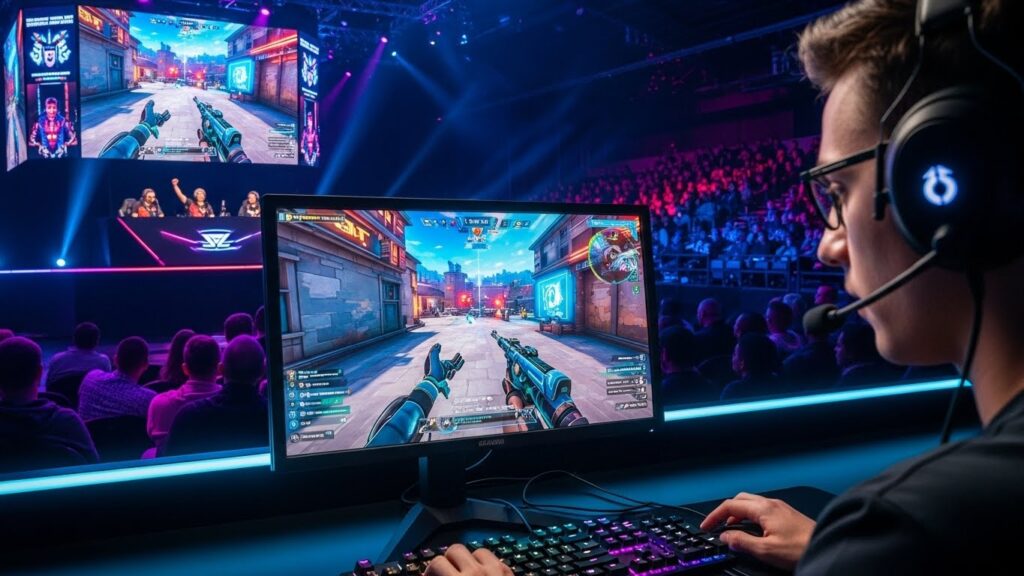
Esports, short for electronic sports, has become one of the most significant cultural phenomena of the 21st century. What began as a niche activity among gaming enthusiasts has rapidly expanded into a global industry, with millions of fans, lucrative sponsorships, and professional players. The rise of esports is a testament to how the digital world has reshaped entertainment, and its rapid evolution has sparked conversations around its legitimacy, growth, and future potential. In this blog post, we’ll delve into the journey of esports, from its humble beginnings to becoming a multi-billion-dollar industry, and explore what lies ahead for this thrilling competitive landscape.
The Humble Beginnings: The Origins of Esports
Esports didn’t happen overnight. Its roots can be traced back to the early 1990s when competitive gaming began to gain traction. At this time, gaming competitions were primarily local events or small-scale tournaments, often organized by gaming communities or hobbyist groups. Unlike today’s professionally run events, these competitions were relatively informal and unstructured.
One of the earliest milestones in competitive gaming history was the creation of the first “esports” tournament in 1997, the Red Annihilation tournament for Quake, a popular first-person shooter. This event, though small by today’s standards, offered a Ferrari as the grand prize, which sparked interest and gave legitimacy to the idea of competitive gaming. More tournaments followed, and as the internet began to connect gamers from around the world, the foundation for a global competitive gaming scene was laid.
Throughout the late 1990s and early 2000s, games like StarCraft, Warcraft III, and Counter-Strike grew in popularity and attracted more competitive players. In these early years, esports was still largely seen as a subculture rather than a mainstream activity. Gamers competed out of passion for their favorite games, and prize money was often minimal. However, the growing number of tournaments and the increasing visibility of gaming communities set the stage for something bigger.
The Birth of Professional Esports: A New Era of Competition
The early 2000s marked a significant shift in how esports was perceived. With the growth of high-speed internet and online gaming, the competitive landscape began to professionalize. Games like Warcraft III, StarCraft II, and Counter-Strike began to attract players who were not just passionate about gaming but also skilled enough to turn it into a career. The concept of professional esports organizations and players began to take shape.
The creation of major esports tournaments, such as the World Cyber Games (WCG) and the Electronic Sports World Cup (ESWC), gave structure and visibility to competitive gaming. These events attracted players from across the globe and drew large audiences both online and in person. Esports was no longer a hobby; it had become an organized, serious competition with prize money, sponsorships, and recognition.
During this period, major gaming companies started to recognize the potential of esports as a marketing tool and a way to increase the longevity of their games. Developers like Blizzard Entertainment and Valve began designing games with competitive play in mind, offering balance, support, and tools that encouraged competitive environments. This led to the rise of iconic esports titles like League of Legends, Dota 2, and Overwatch, which would go on to dominate the scene in the following years.
The Explosion of Esports: From Niche to Mainstream
The 2010s marked a pivotal decade in the history of esports. Competitive gaming began to shift from a niche activity to a mainstream phenomenon, driven by factors such as the rise of streaming platforms, global viewership, and massive sponsorships.
The launch of Twitch in 2011 was a game-changer for esports. Twitch allowed gamers to stream their gameplay live to audiences around the world, and for the first time, fans could watch competitive gaming events in real-time from the comfort of their own homes. With its interactive chat features and community-driven content, Twitch created a new avenue for fans to connect with their favorite players and teams. The platform quickly became the go-to destination for esports content, with millions of viewers tuning in to watch everything from casual streams to high-stakes tournaments.
As esports grew, so did the sponsorships. Major global brands like Coca-Cola, Intel, Red Bull, and Audi began to invest heavily in the esports ecosystem. These sponsorships provided critical funding for tournaments, teams, and players. The prize pools for tournaments like The International (Dota 2’s flagship event) began to reach staggering amounts, with The International 2018 boasting a prize pool of over $25 million, solidifying the notion that esports was not only here to stay but could also rival traditional sports in terms of financial stakes.
Professional esports teams like Team Liquid, Cloud9, and FaZe Clan emerged as household names, attracting top-tier players and garnering a massive following from fans worldwide. These organizations began to operate similarly to traditional sports franchises, complete with sponsors, coaches, analysts, and even team merchandise. With the explosion of esports came an entire ecosystem that included content creators, streamers, event organizers, media rights, and more.
Esports as a Career: The Professionalization of Gaming
One of the most remarkable aspects of the rise of esports is how it has transformed gaming from a casual hobby into a viable career. The increasing popularity of esports has created opportunities for professional players, coaches, analysts, casters, and content creators to make a living doing what they love.
Esports players, in particular, have become celebrities in their own right. They are not only recognized for their in-game skill but also for their personalities, streams, and interactions with fans. Top-tier esports athletes can earn substantial income through tournament prize pools, sponsorships, streaming revenue, and merchandise sales. The path to becoming a professional player is demanding and requires years of practice and dedication, similar to the commitment required of traditional athletes.
In addition to individual players, the esports ecosystem has created a range of career opportunities. Coaches and analysts help guide players and teams to success, while commentators and broadcasters add excitement and narrative to events. Content creators, who stream their gameplay or create esports-related content, have become integral parts of the community and generate income through sponsorships, ad revenue, and fan donations.
With the growth of esports, universities and educational institutions have also recognized the potential of competitive gaming. Many universities now offer esports scholarships, and some have even built dedicated esports arenas. The rise of collegiate esports has paved the way for young, talented players to pursue esports as a career, with some even opting to forgo traditional higher education in favor of professional gaming.
The Global Impact of Esports: A Cultural Movement
Esports has become more than just a form of entertainment—it is now a global cultural movement. The widespread popularity of games like League of Legends, Fortnite, and Call of Duty has brought together players and fans from all corners of the globe. Esports has united people of different ages, nationalities, and backgrounds, all drawn together by a shared love of competitive gaming.
Esports has also found a place in traditional sports culture. Football clubs, basketball teams, and even esports leagues have partnered with established professional sports organizations. Teams like FC Barcelona and Paris Saint-Germain have fielded esports teams, particularly in games like FIFA and League of Legends, further solidifying esports as a mainstream form of entertainment.
The integration of esports into the cultural fabric has led to its inclusion in major international events and even discussions about its place in the Olympics. Though esports has not yet made its Olympic debut, the International Olympic Committee has acknowledged the growing role esports plays in global entertainment. The increasing crossover between esports and traditional sports further highlights how esports is not just a passing trend, but a permanent fixture in the world of entertainment.
The Future of Esports: Endless Possibilities
The future of esports is bright, and there are several key trends that are likely to shape its growth in the years to come. One of the most exciting possibilities is the integration of emerging technologies like virtual reality (VR) and augmented reality (AR) into esports. These technologies could revolutionize the viewing experience by allowing fans to interact with games and players in ways never seen before. VR and AR could take esports broadcasting to new heights, offering an immersive experience that brings fans closer to the action.
Mobile gaming and mobile esports are also expected to grow rapidly. With the increasing power of smartphones and the accessibility of mobile games, esports is no longer limited to PC and console players. Mobile esports tournaments, such as PUBG Mobile and Clash Royale, have already gained significant traction, particularly in regions like Southeast Asia and India, where mobile gaming is incredibly popular.
Another exciting development is the continued professionalization of esports. As the industry matures, we can expect to see more structured leagues, better support for players, and an increasing number of organizations investing in esports. As more sponsorships and media rights deals are forged, esports will continue to grow into a multi-billion-dollar industry, offering countless career opportunities for those who want to be a part of this digital revolution.
Conclusion: A Global Phenomenon with Endless Potential
Esports has undergone a dramatic transformation from its early days as a niche hobby to a global powerhouse in the entertainment industry. It has created a thriving ecosystem that encompasses professional players, organizations, fans, and entire industries. The future of esports is filled with boundless possibilities, and as technology continues to evolve, we can expect the competitive gaming scene to grow even more dynamic and exciting.



More Stories
Pixels to Podiums: The Evolution of Esports in the Modern Era
Pixels to Powerhouses: How Esports Redefined Competition in the Digital Age
Pixels to Powerhouses: How Esports Redefined Competition in the Digital Age