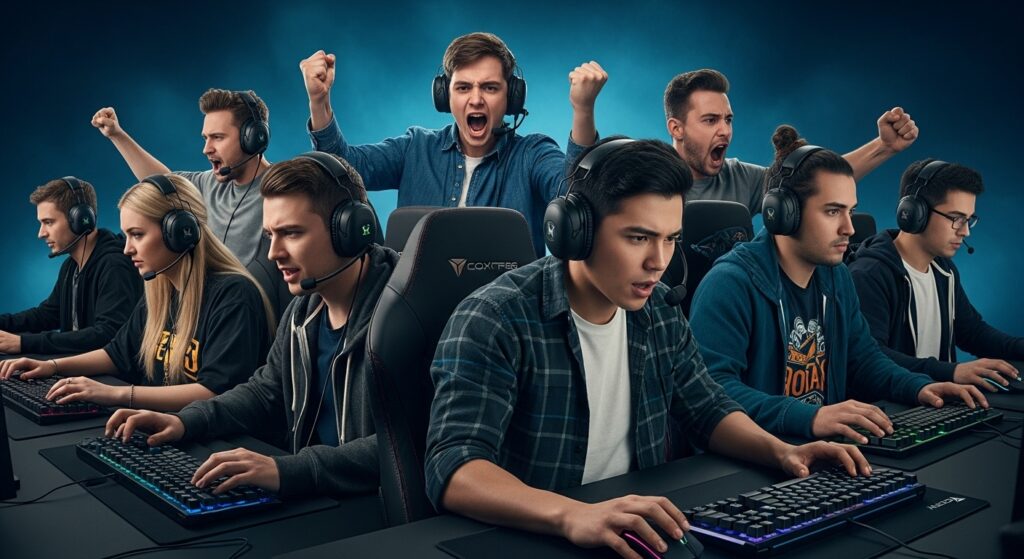
Esports, once a niche subculture, has rapidly transformed into a global phenomenon. With its massive audience, lucrative sponsorships, and professional leagues, competitive gaming has cemented its place as one of the fastest-growing industries in the world. The sheer scale of esports tournaments and the ever-expanding fan base demonstrate how much the gaming world has evolved. In this blog post, we will explore how esports came to be, its rapid rise in popularity, and what the future holds for this exciting field.
The Origins of Esports: From Arcade Competitions to Global Spectacles
The concept of competitive gaming has been around almost as long as video games themselves. The earliest instances of competitive gaming can be traced back to the 1970s, when arcade games like “Pong” and “Space Invaders” were played in local tournaments. These small-scale events laid the groundwork for what would eventually grow into the massive esports ecosystem we see today.
The true turning point for esports came in the late 1990s and early 2000s, with the advent of online multiplayer games. Titles like “StarCraft,” “Warcraft III,” and “Quake” allowed players to compete against each other from the comfort of their homes, connecting through the internet. This opened the door for larger, more organized competitions. In South Korea, a booming esports culture began to emerge around games like “StarCraft,” with national TV stations broadcasting tournaments. This marked the beginning of competitive gaming as we know it.
By the mid-2000s, esports started to grow beyond niche communities, with major international events like the “World Cyber Games” and “Electronic Sports World Cup” helping to fuel interest. What was once a casual hobby had transformed into a serious, professional sport.
The Explosion of Esports: A Global Industry
Fast forward to today, and esports is no longer just a hobby—it’s a full-fledged industry. Major esports leagues, such as the League of Legends Championship Series (LCS) and the Overwatch League (OWL), attract millions of viewers every year, and the players themselves have become superstars with substantial followings. The 2020 League of Legends World Championship, for example, garnered over 100 million viewers, rivaling the viewership numbers of traditional sports events like the Super Bowl.
The growth of esports has been fueled by a variety of factors. The rise of streaming platforms like Twitch, YouTube Gaming, and Facebook Gaming has provided a direct connection between players and fans. These platforms allow viewers to watch their favorite players and teams compete in real-time, creating an immersive fan experience that has further solidified esports as a mainstream entertainment option.
Sponsorships from major brands like Coca-Cola, Intel, and Red Bull have poured millions of dollars into the esports ecosystem, helping to fund professional leagues and events. In addition, the prize pools for esports tournaments have grown exponentially. In 2018, the International Dota 2 Championship boasted a prize pool of over $25 million, attracting the best teams and players from around the world.
The Evolution of Esports as a Career Path
One of the most remarkable aspects of esports’ rise is the emergence of competitive gaming as a legitimate career path. Professional esports athletes are no longer seen as mere hobbyists, but as highly skilled individuals who train and compete at the highest levels of gaming. These athletes spend countless hours practicing their skills, strategizing with their teams, and analyzing game footage to maintain their competitive edge.
In addition to professional players, there is a growing ecosystem of coaches, analysts, commentators, streamers, and content creators who contribute to the success of the esports industry. Many of these roles offer a sustainable career for individuals passionate about gaming, even if they are not competing professionally. The rise of streaming platforms has enabled players and creators to generate revenue through subscriptions, sponsorships, and donations, turning gaming into a viable long-term profession.
For many aspiring gamers, esports represents a dream opportunity. As esports continues to grow, the barrier to entry is lower than it has ever been, allowing individuals from diverse backgrounds to participate in the industry in various capacities. Whether it’s as a professional player, a coach, or even a content creator, esports offers a wide range of career paths that can be financially rewarding and personally fulfilling.
The Culture of Esports: Community, Fans, and Content Creation
At its core, esports is more than just the competition itself—it’s about the community that surrounds it. The esports ecosystem thrives on passionate fans who rally behind their favorite players, teams, and games. This community-driven aspect is one of the key reasons why esports has been able to gain such widespread popularity.
The relationship between players and fans is unique. Through social media and live streaming platforms, fans can interact directly with their favorite gamers, watch behind-the-scenes footage, and even engage in Q&A sessions. This level of access helps to build a strong connection between players and their supporters, fostering a sense of loyalty and excitement around esports events.
Content creation also plays a significant role in the growth of esports culture. Streamers and content creators share their gaming experiences, tutorials, and personality-driven content, making them central figures in the esports ecosystem. Popular personalities like Ninja, PewDiePie, and Shroud have helped bring gaming into the mainstream, attracting millions of viewers and contributing to the cultural acceptance of esports.
Furthermore, events like the ESL One, IEM, and the aforementioned League of Legends World Championship are not just competitions—they are celebrations of gaming culture. These tournaments often feature live performances, fan meetups, and in some cases, entire festivals dedicated to gaming and esports.
The Future of Esports: Mainstream Dominance and New Technologies
As esports continues to evolve, its future looks incredibly promising. With more mainstream media coverage, bigger sponsorships, and increasing viewership, esports is quickly becoming a permanent fixture in the global entertainment landscape. The introduction of new technologies will further amplify this growth.
Virtual Reality (VR) and Augmented Reality (AR) are expected to play significant roles in the future of esports. These technologies can create more immersive experiences for both players and spectators, allowing fans to “step into” the action and experience tournaments from unique perspectives. Additionally, as internet speeds improve with the rollout of 5G, esports could become even more accessible to viewers, offering ultra-high-definition streaming with minimal latency.
The integration of blockchain and cryptocurrencies into the esports ecosystem is also on the horizon. Blockchain technology could streamline tournament management, ensuring fair play and transparency, while cryptocurrencies could provide new ways for players and fans to engage with the community. Esports betting, already popular in some regions, may become even more mainstream with the addition of these technologies.
Finally, as esports grows in popularity, it is likely to attract more traditional sports organizations and even governments. In fact, some countries, such as South Korea and China, have already recognized esports as an official sport, with esports competitions being featured in national sporting events and schools offering scholarships for esports players. The eventual inclusion of esports in multi-sport events like the Olympics is also a possibility that many industry insiders are watching closely.
Conclusion: Esports as a Cultural and Competitive Force
Esports has come a long way from its humble beginnings as a collection of local gaming competitions. Today, it stands as a global industry, complete with professional athletes, massive audiences, and thriving communities. The excitement surrounding esports is palpable, and its influence continues to grow in both the digital and physical worlds.
Whether you’re a casual gamer, a die-hard esports fan, or an aspiring professional player, one thing is clear: esports is here to stay. As the industry continues to expand, its impact on gaming, culture, and entertainment will only deepen, marking the beginning of a new era for competitive gaming.



More Stories
Pixels to Podiums: The Evolution of Esports in the Modern Era
Pixels to Powerhouses: How Esports Redefined Competition in the Digital Age
Pixels to Powerhouses: How Esports Redefined Competition in the Digital Age