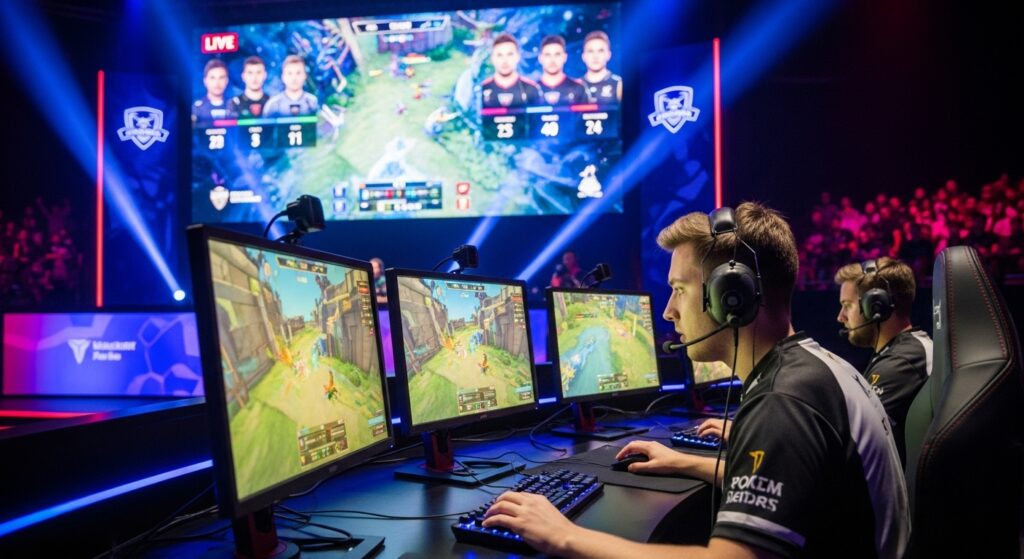
Esports, or competitive gaming, has grown from a niche pastime into a global cultural phenomenon over the past two decades. What was once considered a hobby for a small group of enthusiasts has transformed into a multi-billion-dollar industry that attracts millions of viewers, players, and sponsors worldwide. The rise of esports has not only revolutionized the gaming world but has also challenged traditional perceptions of sports, entertainment, and professional competition.
Early Beginnings of Competitive Gaming
The origins of esports can be traced back to the 1970s and 1980s when video games started gaining popularity in arcades and home consoles. Early competitions were informal and often held in local gaming centers or schools. Games like Space Invaders, Pac-Man, and Donkey Kong paved the way for competitive gaming, but it wasn’t until the 1990s that organized tournaments began to take shape.
In 1990, the Nintendo World Championships showcased players from across the United States competing for prizes. This event set a precedent for large-scale gaming competitions and demonstrated that video games could captivate audiences beyond casual play. Around the same time, PC gaming started to gain traction, and titles like Doom and Quake introduced multiplayer modes, allowing players to compete online for the first time.
The Rise of Online Gaming
The late 1990s and early 2000s marked a turning point for esports, largely due to the rise of the internet and online gaming. Online multiplayer games allowed players from different regions to compete against each other in real-time, breaking the geographical barriers that had previously limited competition.
Games like StarCraft in South Korea created a unique esports culture, where professional players became national celebrities. South Korea, in particular, became a hub for competitive gaming, with dedicated television channels broadcasting live matches and professional leagues forming around popular titles. This model would eventually inspire the development of esports infrastructure around the world.
The Professionalization of Esports
As esports grew in popularity, it began to attract significant investment from sponsors, media companies, and game developers. By the 2010s, esports had become a professional industry with players signing contracts, receiving salaries, and competing in structured leagues. The introduction of major tournaments with large prize pools, such as The International for Dota 2 and the League of Legends World Championship, helped solidify esports as a legitimate form of professional competition.
Professional teams emerged, often backed by gaming organizations or investors, and players dedicated themselves to full-time training. Similar to traditional athletes, esports players began to follow strict routines, practice for several hours a day, and work with coaches to refine strategies. The rise of streaming platforms like Twitch further allowed players to engage with fans, creating a more personal and interactive experience that traditional sports often struggle to provide.
Popular Esports Titles and Genres
Esports encompasses a wide range of games and genres, each attracting different types of audiences and players. Multiplayer Online Battle Arena (MOBA) games, such as League of Legends and Dota 2, are among the most popular, emphasizing teamwork, strategy, and quick decision-making. First-Person Shooters (FPS) like Counter-Strike: Global Offensive and Call of Duty focus on precision, reflexes, and tactical coordination.
Other genres, including fighting games like Street Fighter and Tekken, real-time strategy games like StarCraft II, and battle royale games like Fortnite and PUBG, have also carved out their own competitive communities. Each genre offers unique challenges and requires distinct skill sets, which has helped esports appeal to a diverse audience.
The Role of Streaming and Social Media
The growth of esports is closely tied to the rise of streaming platforms and social media. Twitch, YouTube Gaming, and other streaming services allow players to broadcast their gameplay to millions of viewers, creating a new form of entertainment and fan engagement. Fans can watch professional matches, follow their favorite players, and participate in live chats, creating a sense of community around esports.
Social media platforms also play a crucial role in promoting tournaments, building player brands, and fostering global esports communities. Memes, highlights, and behind-the-scenes content help generate excitement and maintain engagement between events. The accessibility of these platforms has made esports more inclusive, allowing fans from all over the world to participate in the culture without physical attendance.
Economic Impact of Esports
The esports industry has grown into a multi-billion-dollar market, driven by sponsorships, advertising, media rights, merchandise, and ticket sales. Major corporations, including technology companies, beverage brands, and apparel manufacturers, have invested heavily in esports sponsorships, recognizing the value of reaching a young, tech-savvy audience.
Prize pools for tournaments have reached unprecedented levels. For example, The International in 2023 offered a prize pool exceeding $40 million, highlighting the financial stakes involved in esports competition. Beyond prize money, professional players earn income through salaries, streaming revenue, sponsorships, and content creation, making esports a viable career path for talented individuals.
Cultural Significance of Esports
Esports has not only reshaped the gaming industry but has also influenced broader culture. Professional players are celebrated as role models, and esports teams have passionate fanbases that rival those of traditional sports franchises. Major tournaments draw millions of viewers worldwide, with some events filling stadiums and arenas, creating an electrifying live experience.
Esports has also contributed to discussions about inclusivity and representation. Women, LGBTQ+ players, and players from diverse backgrounds are increasingly visible in the esports scene, challenging traditional stereotypes about gamers and fostering a more inclusive community.
Challenges Facing the Esports Industry
Despite its rapid growth, esports faces several challenges. Player burnout and mental health issues are common due to the intense demands of professional competition. Long hours of practice, high-pressure tournaments, and constant public scrutiny can take a toll on athletes, highlighting the need for support systems and wellness programs.
Regulatory issues and inconsistent governance also pose challenges. Unlike traditional sports, esports lacks a unified governing body, leading to variations in rules, standards, and player protections across different games and regions. Additionally, concerns about cheating, match-fixing, and unethical practices require ongoing attention to maintain the integrity of the industry.
The Future of Esports
The future of esports looks promising, with continued growth expected in viewership, investment, and mainstream recognition. Technological advancements, such as virtual reality, augmented reality, and cloud gaming, could transform the way esports is played and consumed. These innovations may allow for more immersive experiences, bringing fans closer to the action than ever before.
Esports is also expanding into educational and developmental arenas. Schools and universities are establishing esports programs, offering scholarships, and integrating competitive gaming into their extracurricular activities. This legitimization not only nurtures young talent but also provides alternative career pathways in a rapidly evolving digital landscape.
Conclusion
Esports has evolved from humble beginnings into a dynamic, influential industry that blends entertainment, competition, and culture. Its growth reflects broader technological and social changes, demonstrating the power of digital communities and online engagement. While challenges remain, the potential of esports to reshape the future of entertainment, professional competition, and social interaction is undeniable. As the industry continues to innovate and expand, esports is poised to maintain its position at the forefront of modern culture, captivating audiences and inspiring players around the globe.



More Stories
Pixels to Podiums: The Evolution of Esports in the Modern Era
Pixels to Powerhouses: How Esports Redefined Competition in the Digital Age
Pixels to Powerhouses: How Esports Redefined Competition in the Digital Age