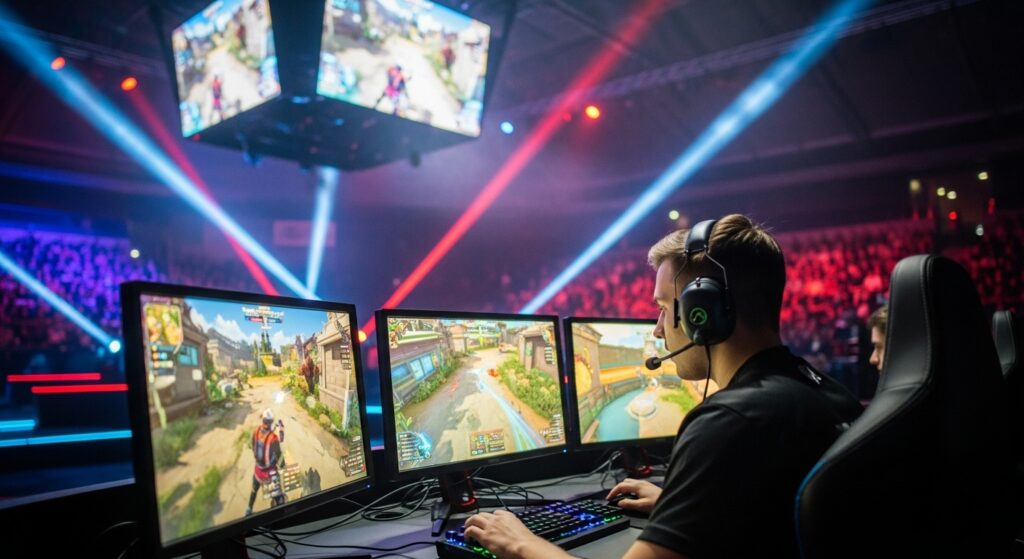
In recent years, esports has evolved from a niche hobby to a global phenomenon, captivating millions of players, fans, and viewers around the world. But beyond the glitz of multi-million-dollar prize pools, sold-out arenas, and professional teams, esports has quietly been playing a transformative role in connecting people from different cultures, backgrounds, and corners of the world. It’s a powerful force that transcends geographical boundaries, creating virtual spaces where people can unite, collaborate, and compete, regardless of where they come from.
In this blog post, we will explore how esports is bridging global communities, fostering inclusivity, and creating opportunities for individuals from all walks of life to come together. From the social power of online tournaments to the development of international esports leagues, we’ll dive into how esports is reshaping the way we think about connection in an increasingly digital world.
A New Era of Global Connectivity
The advent of the internet and digital platforms has radically changed the way people interact and communicate with one another. In the past, connecting with people across the globe meant costly phone calls, limited access to information, and long wait times for letters or messages. Fast forward to today, and technology has not only made it easier to communicate but has also revolutionized entertainment, sports, and gaming.
Esports is a prime example of how digital spaces have bridged the gap between cultures, allowing people from all over the world to compete against one another in real-time. Unlike traditional sports, which are often confined to physical locations, esports events are hosted online, making it possible for anyone with an internet connection to participate or spectate. Whether it’s a League of Legends tournament in North America or a Counter-Strike: Global Offensive event in Europe, players and fans from different countries can join in, watch, and share experiences together.
As a result, esports has fostered a sense of global community, where language barriers, time zones, and geographic locations are no longer significant obstacles. This level of connectivity is unique to the digital age and has paved the way for a new form of shared experience that transcends borders.
Esports Tournaments: Where Global Rivalries Thrive
One of the most exciting aspects of esports is the international tournaments that bring players from all over the world together to compete for glory. Major events like The International for Dota 2, the League of Legends World Championship, and Overwatch League playoffs are not only competitive but also serve as cultural exchange hubs. These tournaments unite players, teams, and fans from different parts of the world, creating an environment where the focus is on shared love for the game rather than differences in nationality, language, or background.
For example, The International (TI), the world championship for Dota 2, has become an iconic event in the esports calendar. With participants hailing from every corner of the globe, TI showcases the best of international competition, with players battling not only for the championship but also for global recognition. Fans from North America, Europe, Southeast Asia, China, and other regions tune in to watch their favorite teams, showing how esports has brought together a diverse community under one digital roof.
Similarly, the League of Legends World Championship draws viewers from over 20 countries each year. Teams representing regions like the United States, South Korea, China, Europe, and more go head-to-head, each hoping to secure a spot in the prestigious finals. The event has become a global spectacle, one that encourages fans to unite over their shared admiration for the players, teams, and the sport itself.
Esports tournaments not only break down physical barriers but also provide an inclusive environment where players from different cultural backgrounds can engage, collaborate, and forge friendships. Many players even form lasting bonds with teammates and fans across countries, something that’s more difficult to achieve in traditional sports due to travel, language, and time zone limitations.
Online Multiplayer Games: A Virtual Meeting Place
Before the rise of professional esports leagues, online multiplayer games were already serving as virtual spaces for players to come together, form teams, and connect with others. Titles like World of Warcraft, League of Legends, Fortnite, and Call of Duty created ecosystems where players could meet new people from different countries, build relationships, and develop a sense of camaraderie as they worked together to achieve common goals.
Unlike traditional single-player games, online multiplayer titles have become social experiences. Whether it’s a squad of Fortnite players teaming up for a battle royale or a League of Legends team strategizing for a 5v5 match, these games foster communication and collaboration across borders. Players must work together to win, relying on each other’s strengths and learning to overcome cultural or language barriers.
Moreover, many games offer voice chat and in-game text communication, making it easier for people to interact with others in real time. This is particularly important in a world where many players may not speak the same native language but are still able to coordinate effectively by using simplified language or digital translators. This level of accessibility is one of the key factors that has allowed esports to thrive globally.
Esports as a Cultural Exchange
Esports is more than just a form of entertainment—it’s also a vehicle for cultural exchange. As players from diverse regions come together, they bring their unique perspectives, styles of play, and strategies to the table. For example, teams from South Korea are renowned for their exceptional League of Legends skills and fast-paced, aggressive gameplay, while North American teams might focus on a more methodical and strategic approach. When these teams face off, fans from both sides learn from each other’s playstyles, expanding their understanding of the game and of different cultures.
Additionally, esports organizations are increasingly focused on building international teams that reflect the global nature of the sport. For example, the popular Overwatch League (OWL) is home to teams based in cities around the world, such as London, Paris, Shanghai, and New York. These teams often recruit players from various countries, forming rosters that represent different regions and bringing a mix of cultural influences into the competition.
The integration of players from different cultures also encourages fans to embrace diversity, and they often adopt new terms, strategies, and customs from other countries. This cultural exchange fosters mutual respect and understanding, as well as a deeper appreciation for the global nature of esports.
Esports Communities: Building Lifelong Friendships
One of the most powerful aspects of esports is its ability to bring people together in a way that extends beyond the gaming experience itself. Esports communities are some of the most passionate, supportive, and inclusive groups on the internet. Whether it’s following a professional team on social media, joining fan clubs, or participating in online forums, esports fans have found ways to stay connected and build meaningful relationships with others who share their love for the game.
These communities are particularly important in regions where access to traditional sports or entertainment may be limited. For example, players in rural areas or developing countries can find a sense of belonging in global esports communities, where they are treated as equals, regardless of their background or location. Through esports, fans and players alike are able to meet people they might never have encountered in real life, forming bonds that transcend digital spaces.
The friendships formed in these communities can also extend beyond the virtual world. Many esports fans and players meet in person at events and tournaments, further strengthening the bonds that were formed online. This sense of global camaraderie has made esports one of the most powerful unifying forces in modern society.
The Future of Esports and Global Connectivity
As esports continues to grow and evolve, its role in connecting people from all corners of the globe will only become more significant. New gaming technologies like virtual reality (VR) and augmented reality (AR) are likely to enhance the immersive experience, making it even easier for players to interact and compete in shared digital spaces. Furthermore, as the esports ecosystem continues to expand with new games, leagues, and platforms, the opportunities for cross-cultural interaction will increase.
In addition to gaming, esports has the potential to drive social change. Professional players and organizations are already using their platforms to raise awareness about important issues like mental health, diversity, and inclusion. Esports events, especially those that attract millions of viewers, can be powerful tools for social good, encouraging positive dialogue and bringing attention to global causes.
Conclusion: A Digital Bridge Between Cultures
Esports has undoubtedly become a global powerhouse, uniting people from all walks of life through a shared passion for gaming. By transcending geographical and cultural boundaries, esports fosters collaboration, competition, and camaraderie in ways that were previously unimaginable. Whether through international tournaments, online multiplayer games, or global esports communities, the digital landscape of esports is helping to create a more interconnected world.
As the industry continues to grow, it will undoubtedly play an even greater role in bridging global communities, breaking down barriers, and promoting inclusivity. In an era where connections are increasingly virtual, esports has proven that gaming can be a force for positive change, bringing people together and building friendships that last a lifetime.



More Stories
Pixels to Podiums: The Evolution of Esports in the Modern Era
Pixels to Powerhouses: How Esports Redefined Competition in the Digital Age
Pixels to Powerhouses: How Esports Redefined Competition in the Digital Age