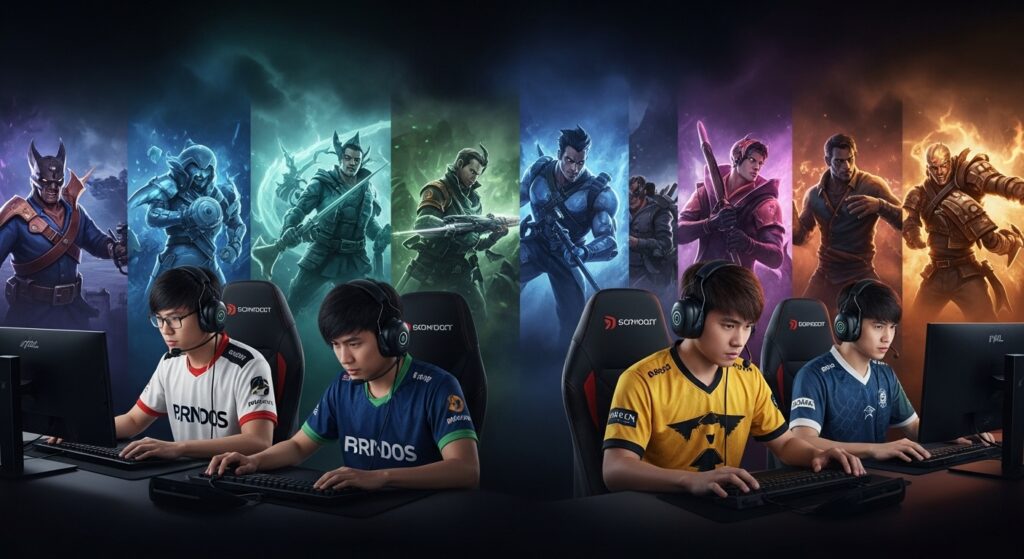
In the last two decades, competitive video gaming — now widely known as esports — has metamorphosed from basement LAN parties into a billion‑dollar global phenomenon. What began as informal gatherings of passionate gamers has grown into structured leagues, major sponsors, and even efforts to integrate with the Olympic movement. In this blog post, I’ll take you through the history, the ecosystem, the challenges, emerging trends, and what lies ahead for esports in 2025 and beyond.
The Roots of Esports: Humble Beginnings
The seeds of esports were planted long before the term existed. In the 1970s and 1980s, arcade competitions, high‑score challenges, and early networked games allowed a competitive spirit to emerge. Over time, as PCs and consoles proliferated and the internet matured, multiplayer gaming became more accessible. Titles like Quake, StarCraft, Counter‑Strike, and Warcraft carved early paths for competitive play.
But it was in the 2000s that the foundations of modern esports took shape: tournaments, sponsorships, team structures, and online streaming. What was once a niche hobby evolved into a serious endeavor, as prize pools and audiences began growing steadily.
The Modern Esports Ecosystem
Esports today is not just about gamers competing — it’s a rich ecosystem composed of many interdependent parts. To understand how it functions, let’s break down the key stakeholders.
1. Players and Teams
Top-level professional players often train full time, sometimes for 6–10 hours a day or more. They are supported by coaches, analysts, support staff (psychologists, nutritionists), and management. Teams sign players under contracts, negotiate revenue shares, and aim to perform well in leagues and tournaments.
Teams also manage branding, merchandise, social presence, and fan engagement — much like traditional sports franchises. Some teams are backed by investment groups, sponsors, or even celebrities.
2. Game Developers and Publishers
One major difference between esports and many traditional sports is that esports titles are owned by game publishers. This means that publishers often control tournament rules, licensing, broadcast rights, game updates (patches), and league structures.
They may run their own official leagues or partner with third-party organizers. Because publishers can change the game (balance patches, new mechanics, etc.), teams and players must adapt continually.
3. Tournament Organizers & Leagues
These are the entities that create the competitive structure: regional leagues, international tournaments, seasonal circuits, qualifiers, and finals. They manage logistics: venues, broadcasting, scheduling, rules, prize pools, and broadcasting rights.
Some tournaments are independent; others are sanctioned by the publisher. In many cases, tournaments rely heavily on sponsorships, media deals, and ticketing to fund operations.
4. Broadcast Platforms & Media Rights
Esports is primarily consumed via online streaming (Twitch, YouTube, regional platforms). Broadcasters and platforms secure rights to stream matches, produce commentary, highlight packages, and carry advertising or subscription revenue.
In many markets, esports is starting to move toward hybrid distribution models, including TV networks and regional broadcasting deals.
5. Sponsors, Advertisers & Brands
Sponsors have been vital to the growth of esports. Brands see esports as a way to connect with younger, digital-native audiences. Sponsorships come in many forms: title sponsors, in-game integrations, jersey branding, digital overlays, event sponsorships, and more.
Non-endemic brands (i.e. brands not originally associated with gaming) — like automotive, fashion, energy drinks — have increasingly shown interest, bringing more mainstream capital into the space.
6. Fans & Community
The fans are the lifeblood of esports. They consume matches, engage with players on social platforms, buy merchandise, attend live events, and participate in online communities. A vibrant and engaged fan base is essential for sustaining viewership metrics and monetization.
Community casting (streamers running parallel broadcasts), fan translations, meme culture, and interactive content play a huge role in how fans experience esports.
Key Challenges Facing Esports
Despite its growth and popularity, esports faces several structural and operational challenges. Understanding them is essential to foresee how the industry might evolve.
1. Monetization & Revenue Stability
While some top-tier events generate tens of millions in revenue, many smaller tournaments and teams struggle with consistent income. Revenue streams depend heavily on sponsorships, advertising, merchandise sales, and media deals — all of which can fluctuate.
Some publishers are experimenting with new revenue models (e.g. betting sponsorship, subscriptions, digital goods, blockchain), but scalability and sustainability remain concerns.
2. Rapid Game Changes & Meta Volatility
Because publishers frequently update their games (patches, buffs/nerfs, new mechanics), the competitive “meta” (optimal tactics and strategies) can shift dramatically. Teams must continuously adapt. This volatility also poses a challenge for predictive analytics and long-term planning.
3. Player Burnout & Career Longevity
Esports careers are relatively short compared to many traditional sports. The pressure to perform, long hours, travel, and media obligations strain players’ mental and physical health. Burnout, declining performance, and early retirement are common.
Developing sustainable training regimens, rest protocols, and after‑career pathways are critical.
4. Regional Imbalance & Infrastructure
While regions like North America, South Korea, China, Europe, and Southeast Asia are mature esports markets, many other regions lack stable infrastructure, funding, or audience scale. This disparity means less access to high-level competition in many parts of the world.
5. Regulatory, Legal & Ethical Issues
Esports faces challenges around gambling and betting, match fixing, doping (in certain cases), intellectual property, and labor rights for players. As the industry grows, regulation and oversight become more critical.
Additionally, the close ties between publishers and tournaments may raise conflicts over fairness, exclusivity, and control.
6. Audience Saturation & Viewer Growth
Some data suggests that interest and hype cycles in esports are beginning to plateau in mature markets. Growth in viewership is becoming more nuanced — not just raw numbers, but retention, engagement quality, and monetizable fans.
Trends Reshaping Esports in 2025
As esports continues to evolve, certain trends are shaping the future more than others. Here are some of the most important ones to watch.
A. Integration with Traditional Sports & Mainstream Media
The boundary between esports and traditional sports is becoming blurrier. Examples include soccer clubs launching their esports divisions, collaborations between sports leagues and game franchises, and joint events. This crossover helps esports gain legitimacy and cross-pollinate fan bases.
B. Rise of Creator-Driven Esports Teams
Instead of teams built purely in corporate boardrooms, newer esports organizations are springing from creator platforms. Influencers, streamers, or pro‑players build teams, cultivating a direct audience and community around their identities. These creator-led teams often blend competitive play with content creation and entertainment.
C. AI, Analytics & Data‑Driven Strategy
Artificial intelligence is transforming coaching, scouting, and match analytics. Teams use AI to simulate strategies, evaluate player performance, predict opponent behavior, and adjust tactics dynamically. For broadcasters, AI can generate automated highlight reels, camera control, and viewer insights.
In addition, advanced analytics are helping fans and commentators understand deeper metrics beyond kills, assists, or wins.
D. Community Casting & Parallel Broadcasts
Community casting — where popular streamers provide their own commentary and engage intimately with fans — has exploded. In some major tournaments, the audience share for community streams rivals or even surpasses official broadcasts. Fans prefer personalities they already follow, with chat interaction and unique commentary.
E. Betting & Sponsorship Turnover
Traditionally, esports publishers were cautious about betting companies as major sponsors due to integrity concerns. But in 2025, some publishers have relaxed those restrictions, allowing betting sponsors in major titles like League of Legends and Valorant. This shift has profound implications for funding — but also raises ethical and regulatory risks.



More Stories
Pixels to Podiums: The Evolution of Esports in the Modern Era
Pixels to Powerhouses: How Esports Redefined Competition in the Digital Age
Pixels to Powerhouses: How Esports Redefined Competition in the Digital Age