Introduction: The Rise of eSports
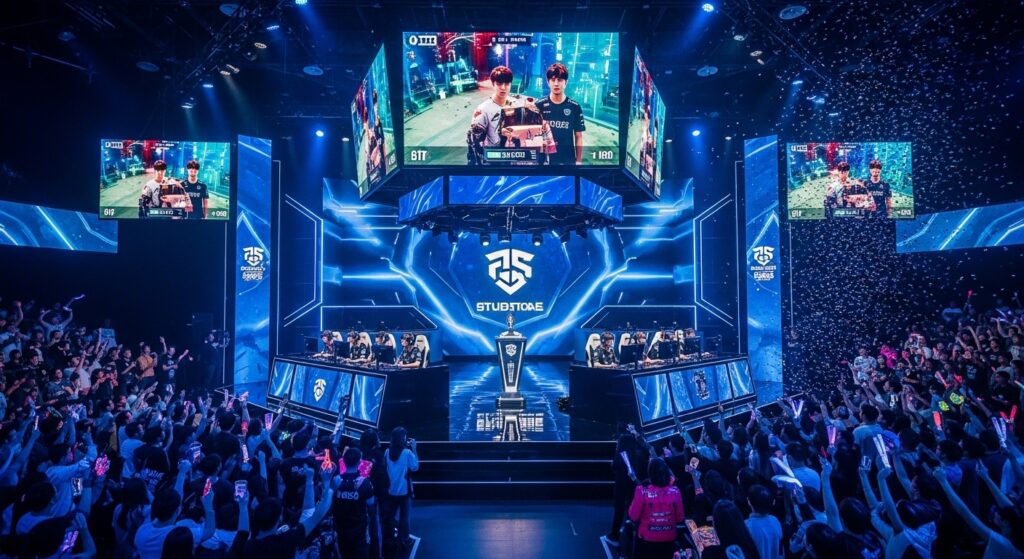
Over the past two decades, eSports has rapidly evolved from a niche hobby to a global entertainment phenomenon, attracting millions of fans, professional players, and enormous financial investments. Once considered a pastime for hardcore gamers, competitive video gaming now stands as a multi-billion-dollar industry, with tournaments held in packed arenas, sponsorships from global brands, and millions of viewers tuning in via streaming platforms. From local LAN events to international tournaments, eSports has become a cultural force with its own star players, dedicated fanbase, and massive prize pools. In this post, we explore the rise of eSports, the games that have shaped its landscape, the economic impact it has created, and its future in the entertainment world.
The Origins of eSports: From High Scores to Professional Leagues
The origins of eSports can be traced back to the early days of video gaming in the late 20th century. In the 1970s and 1980s, arcade games such as “Pong” and “Space Invaders” began to capture the attention of gamers. The competitive element of gaming began to take shape as players competed for high scores on arcade machines. However, the true foundation of eSports emerged in the 1990s with the advent of personal computers and online multiplayer games.
The rise of LAN (Local Area Network) parties, where gamers would connect their computers to compete against each other, marked the early days of organized competitive gaming. Games such as “Doom,” “Warcraft,” and “Quake” were the pioneers of this early eSports era, as they introduced online multiplayer gameplay, allowing players from different locations to compete against one another in real-time.
In the early 2000s, the rise of the internet and the popularity of online gaming platforms such as Battle.net led to the creation of organized tournaments and leagues. The World Cyber Games (WCG), established in 2000, became one of the first major global eSports tournaments, bringing players together from all corners of the world to compete in games like “StarCraft.” This period also saw the creation of competitive leagues for games such as “Counter-Strike” and “Warcraft III,” establishing the groundwork for the professional eSports scene we recognize today.
The Key Games Defining eSports
As the eSports industry expanded, certain games became synonymous with competitive gaming. These games were not only popular among players but also became the focal points of major tournaments and global competitions. Today, these games are played by millions worldwide and are broadcast to millions more through streaming platforms like Twitch and YouTube.
MOBA (Multiplayer Online Battle Arena)
Among the most successful genres in eSports is the Multiplayer Online Battle Arena (MOBA). Games like “League of Legends” (LoL) and “Dota 2” have become iconic in the world of eSports. In these games, teams of players control individual heroes with unique abilities, and their objective is to destroy the opposing team’s base. The strategic depth and fast-paced nature of these games have made them staples of competitive gaming. “Dota 2” hosts the famous “International” tournament, which regularly features a prize pool of over $30 million, while “League of Legends” holds its World Championship, attracting millions of viewers each year.
First-Person Shooters (FPS)
First-person shooters (FPS) such as “Counter-Strike: Global Offensive” (CS:GO), “Overwatch,” and “Call of Duty” have also played a crucial role in the growth of eSports. These games focus on gunplay, reflexes, and team coordination. Teams compete in matches where they must complete objectives like bomb planting or defending critical points. The accessibility of FPS games, coupled with their intense, fast-paced action, has made them crowd favorites. Tournaments like the CS:GO Major Championships and the Overwatch League showcase the high skill ceiling and competitive excitement of these games, drawing in fans from all over the world.
Battle Royale
The Battle Royale genre, exemplified by games like “Fortnite” and “Apex Legends,” has added a new twist to eSports. These games feature a large number of players competing to be the last one standing in a shrinking play area. Battle Royale games are known for their unpredictability, as players battle against both the environment and other competitors. The success of “Fortnite,” with its integration of unique mechanics and cross-platform play, has revolutionized eSports by attracting a younger audience and expanding the viewership base for competitive gaming.
Sports Simulation Games
Sports simulation games, such as “FIFA” and “NBA 2K,” have also found a home in the eSports ecosystem. These games replicate real-world sports, allowing players to compete virtually in football, basketball, and other major leagues. The rise of professional sports eSports leagues, such as the “FIFA eWorld Cup” and the “NBA 2K League,” has demonstrated that competitive gaming can extend into the realm of traditional sports. These tournaments attract both gamers and sports fans, offering an exciting blend of digital sports entertainment.
The Social Impact of eSports
Beyond the competitive nature of eSports, one of the most significant aspects of its rise has been its ability to foster communities. Unlike traditional sports, where fans are often geographically limited to specific regions or teams, eSports offers a global stage where players and fans from all over the world can connect. Through live streaming platforms like Twitch and YouTube, fans can watch their favorite players and teams in real-time, engaging in live chats, cheering on their heroes, and participating in the community.
This sense of belonging is one of the driving forces behind the rise of eSports. As players develop followings, streamers and pro gamers become celebrities in their own right, with fans forming dedicated communities around them. These communities are often more interactive than traditional sports fanbases, allowing for direct engagement between fans and players.
Moreover, eSports has become a platform for breaking down stereotypes. The gaming community has historically been male-dominated, but the rise of female gamers and teams has helped challenge these norms. Female gamers such as “Scarlett” (Lee Joo-yeon) in StarCraft II and “Sasha” (Sasha “Sasha” “Sasha” M.) have earned their place among top competitors, inspiring a new generation of women to pursue careers in gaming and eSports.
eSports also plays an important role in promoting mental health awareness, a topic that has gained attention in recent years. Many professional gamers and streamers have spoken openly about the pressures of competition, the importance of self-care, and the need for mental health support within the gaming community.
The Economic Impact: A Billion-Dollar Industry
eSports has rapidly evolved into a major economic powerhouse. As of recent estimates, the global eSports industry is worth over $1 billion, and its growth shows no signs of slowing down. Revenue in eSports comes from multiple sources, including sponsorships, advertising, media rights, and merchandise. Major brands such as Coca-Cola, Intel, and Red Bull have made significant investments in eSports, seeing it as an opportunity to connect with a younger, tech-savvy audience.
Prize pools for major tournaments are also a major source of revenue. The International Dota 2 tournament, for instance, regularly boasts prize pools that exceed $30 million, and players can take home millions of dollars in earnings. In addition to tournament prizes, professional players and teams can secure endorsement deals and streaming revenue, making eSports a viable career option for top-tier players.
In addition to the players, eSports has created a whole new economy of jobs. Event organizers, commentators, analysts, coaches, content creators, and social media managers are all integral parts of the eSports ecosystem. Universities are now offering scholarships and degree programs in eSports management, broadcasting, and marketing, demonstrating the growing legitimacy of the field.
Technological Advancements in eSports
The success of eSports would not have been possible without the continuous advancement of technology. Faster internet speeds, better gaming hardware, and high-definition broadcasting have all contributed to the rise of competitive gaming. Streaming platforms such as Twitch have revolutionized how people consume eSports content, allowing fans to watch live tournaments from anywhere in the world.
Additionally, the growth of virtual reality (VR) and augmented reality (AR) could further change the landscape of eSports in the future. Imagine watching a tournament in full 3D or using AR to interact with live stats and player data in real-time. These technologies promise to make the experience of eSports more immersive for both players and viewers.
The Future of eSports: From the Digital Arena to the Mainstream
Looking to the future, eSports is poised to continue its trajectory of growth. The integration of competitive gaming into mainstream media outlets, such as television networks and sports channels, signals a shift toward greater acceptance of eSports as a legitimate form of entertainment. It is only a matter of time before eSports is featured in large-scale sporting events and perhaps even the Olympics.
The ongoing rise of mobile gaming, particularly in regions like Asia and Africa, will also continue to broaden the scope of eSports. As mobile internet connectivity improves and smartphones become more powerful, more players and fans will be able to participate in eSports from anywhere in the world.
eSports may also see further convergence with traditional sports. Many professional sports leagues are already investing in eSports teams, and some athletes have started to join the digital competition themselves. This cross-pollination could lead to more integration of eSports into traditional sports broadcasts, creating a hybrid form of entertainment that attracts fans of both types of competitions.
Conclusion: eSports as the Future of Competitive Entertainment
In just a few short years, eSports has transformed from a niche hobby to a global entertainment industry, attracting millions of viewers and massive investments. The rise of online streaming platforms, professional leagues, and the dedication



More Stories
Pixels to Podiums: The Evolution of Esports in the Modern Era
Pixels to Powerhouses: How Esports Redefined Competition in the Digital Age
Pixels to Powerhouses: How Esports Redefined Competition in the Digital Age