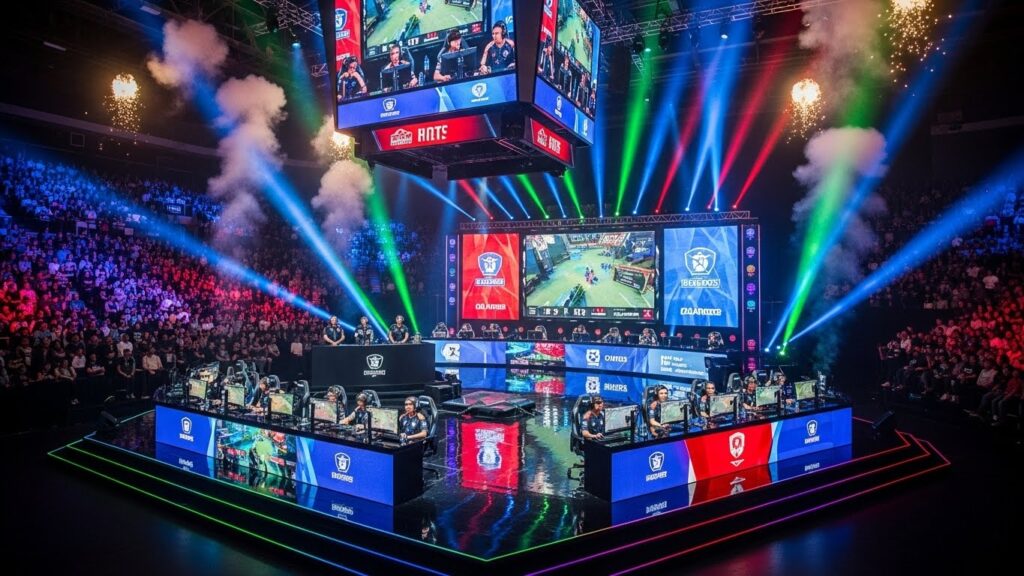
Esports, once a niche hobby for a small group of dedicated gamers, has exploded into a global cultural and economic force. What was once viewed by many as “just playing video games” is now an entire industry encompassing professional leagues, sponsorships, streaming platforms, and millions of fans worldwide. From the early days of LAN parties to multi-million dollar tournaments broadcast on global networks, esports has become a worldwide phenomenon with its own stars, teams, and fanbase. This article explores the history, rise, and future of esports, shedding light on why it has become a dominant force in both entertainment and sports culture.
The Early Days: A Grassroots Movement
In the late 1990s and early 2000s, competitive gaming was largely an underground movement. Local Area Network (LAN) parties and informal tournaments were the backbone of the esports scene. While these events were small and often regional, they laid the foundation for what would eventually become a global industry. Games like Quake, StarCraft, and Warcraft were at the forefront of competitive play. These titles, although primitive by today’s standards, introduced competitive mechanics that captivated players and set the stage for the esports boom that would follow.
At this time, competitive gaming existed mostly on the fringes of the gaming world. It wasn’t yet recognized as a legitimate form of entertainment or competition, but passionate players and organizers began to see potential in these events. The first major tournament that gained widespread attention was the World Cyber Games (WCG) in 2000, which brought together the best players from across the globe to compete in a series of games. Though still limited in scale, events like these served to showcase that esports had the potential to become something much bigger.
The Rise of Esports Leagues and Sponsorships
As the internet evolved and broadband connections became more reliable, the online competitive gaming scene began to grow. Titles such as Counter-Strike, Dota 2, and League of Legends provided a competitive structure and a thriving online community. These games, along with others, served as the bedrock for professional esports leagues, paving the way for esports to evolve from casual tournaments to fully structured competitions.
By the mid-2000s, esports began to gain more attention, and professional leagues started to emerge. The Major League Gaming (MLG) in the United States, founded in 2002, was one of the first organizations to organize large-scale tournaments and offer substantial prize money. MLG also established the concept of franchised teams and regular league events, helping to institutionalize competitive gaming.
Around the same time, developers like Riot Games (creators of League of Legends) and Blizzard Entertainment (creators of Overwatch and StarCraft II) began to see the commercial potential in esports. These companies supported the development of professional esports ecosystems around their games, investing heavily in tournaments, marketing, and infrastructure. In turn, this created a new wave of sponsorship opportunities, attracting brands outside of the gaming industry, including Coca-Cola, Intel, and Mercedes-Benz.
The increasing involvement of big-name sponsors elevated esports to a whole new level, providing the necessary funding to increase tournament prize pools, improve production quality, and expand event venues. For example, The International (TI), the annual Dota 2 tournament, broke records with its prize pool, reaching over $40 million in 2021, a staggering amount compared to traditional sports tournaments.
Esports as a Global Spectacle
With the establishment of major leagues and tournaments, esports quickly transcended its origins as a niche activity. What had once been local LAN parties and small online events was now being broadcast globally, reaching millions of viewers across various streaming platforms like Twitch, YouTube Gaming, and Facebook Gaming.
One of the key turning points for esports’ mainstream recognition was the rise of platforms like Twitch, which launched in 2011. Twitch allowed gamers to broadcast their gameplay live to a global audience, and it didn’t take long for professional esports leagues to use the platform to engage fans. The interactivity of live streaming gave fans a way to interact with players and commentators, creating a new kind of spectator experience.
In 2013, Riot Games’ League of Legends World Championship was broadcast live in arenas and across streaming platforms. By 2019, the event had more than 100 million viewers, rivaling the Super Bowl in terms of viewership. The success of these high-profile tournaments helped propel esports into the mainstream. Major networks like ESPN began covering esports events, and even traditional sports stars began to acknowledge the growing appeal of competitive gaming.
The growth of esports has also seen its expansion into arenas and stadiums, where tens of thousands of fans gather to watch major tournaments. In some countries, esports has even been recognized as an official sport, with national teams being formed to compete in international competitions.
The Economic Impact of Esports
The economic impact of esports is staggering, and it is only growing as the industry matures. As of 2025, the global esports market is expected to be worth over $1.5 billion, with sponsorships, media rights, and advertising driving the majority of revenue. The success of esports has created new job opportunities, both for players and behind-the-scenes professionals.
Professional players in top-tier leagues can earn substantial salaries, with many teams offering multi-million dollar contracts. Prize pools at major tournaments also continue to grow, with some tournaments offering players the chance to win millions of dollars in a single event. In addition to player salaries, esports organizations employ coaches, analysts, content creators, marketing teams, and managers, creating an entire ecosystem of professionals.
The rise of esports has also had a significant impact on the broader gaming industry. Many game developers now design games with competitive elements in mind, integrating multiplayer modes, ranked systems, and spectator features that can contribute to the game’s potential for esports. Furthermore, esports events and tournaments provide a boost to game sales, as many fans will purchase a game to support their favorite teams or players.
Streaming platforms, too, have seen significant financial growth due to the popularity of esports. Twitch, for example, generates revenue through advertising, subscription models, and donations from viewers who want to support their favorite streamers. This has led to an influx of content creators who produce not only gaming content but also discussions, analysis, and news surrounding the esports industry.
The Social and Cultural Impact of Esports
Beyond the financial and economic implications, esports has also had a profound impact on social and cultural dynamics. Esports has created communities of like-minded fans who share a love for specific games, teams, and players. These communities are often built around social platforms, including Discord, Reddit, and various fan websites, where fans interact, share content, and discuss their favorite games and players.
Esports has also been a force for inclusivity and diversity in gaming. While competitive gaming was once dominated by a relatively homogeneous group of players, esports has gradually become more inclusive. Esports events now attract players, fans, and commentators from a variety of backgrounds, ethnicities, and genders. Efforts to make the industry more welcoming and accessible have led to increased participation from women and underrepresented groups.
Furthermore, esports has bridged generational divides, with older generations now participating in esports fandom and younger generations engaging with more traditional forms of entertainment. Parents who grew up with the rise of gaming are increasingly recognizing the legitimacy of esports, while younger people are more likely to consider gaming a mainstream form of entertainment and even a potential career.
The Future of Esports
As esports continues to evolve, there are several key trends and developments to look out for. First, the role of esports in education is gaining traction. Colleges and universities around the world are offering scholarships for esports players, and some have even established competitive teams. This has led to the establishment of collegiate leagues and tournaments, further solidifying the legitimacy of esports as a mainstream career path.
Another trend is the integration of esports into traditional sports leagues. For example, the NBA has established its own esports league, the NBA 2K League, which allows players to compete in a digital version of the popular basketball game. Other traditional sports leagues, including the NFL and the European football leagues, have followed suit, recognizing the synergy between traditional sports and esports.
As technology continues to advance, the experience of watching and playing esports will only improve. Virtual reality (VR) and augmented reality (AR) have the potential to revolutionize the way we experience competitive gaming, making it even more immersive and interactive. Similarly, artificial intelligence (AI) and machine learning could play a role in analyzing gameplay and creating more complex and dynamic competitive environments.
In conclusion, the rise of esports is a story of transformation. From humble beginnings in basements and LAN cafes to a billion-dollar global industry, esports has made a lasting mark on entertainment, culture, and society. As the industry continues to grow, it is clear that esports is not just a passing trend—it is here to stay, and it will continue to shape the future of gaming, competition, and entertainment for years to come.



More Stories
Pixels to Podiums: The Evolution of Esports in the Modern Era
Pixels to Powerhouses: How Esports Redefined Competition in the Digital Age
Pixels to Powerhouses: How Esports Redefined Competition in the Digital Age