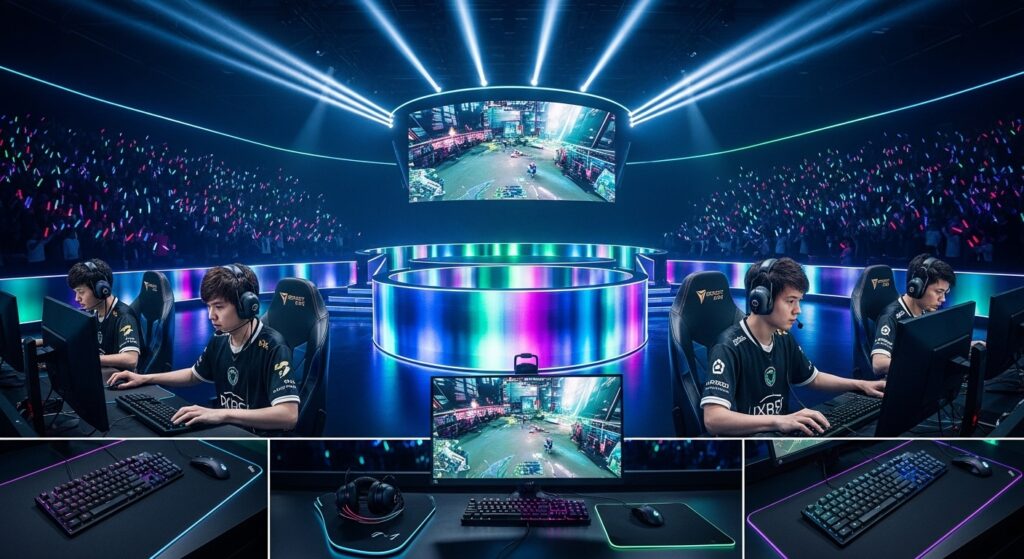
Esports, or electronic sports, has transcended its humble beginnings in arcades and gaming lounges to become one of the most dominant and rapidly growing sectors in the entertainment industry. What started as small competitions among hobbyists and enthusiasts has transformed into a multi-billion-dollar global phenomenon. Professional gamers now enjoy salaries, sponsorships, and recognition that rival those of traditional athletes. Esports is no longer just about playing games—it’s about creating a cultural movement that has captured the attention of millions of fans worldwide. In this blog post, we will explore the evolution of esports, the key games that dominate the industry, the players who compete at the highest level, and the impact esports has had on modern culture.
The Rise of Esports: From Niche Hobby to Global Phenomenon
The story of esports begins with the rise of competitive gaming, which dates back to the 1990s. In the early days, gaming was a solo or casual activity, typically played for fun. However, the growing popularity of multiplayer games created a fertile ground for competition. In 1997, Red Annihilation, a Quake tournament, is often cited as one of the first significant moments in competitive gaming. The prize for the winner was a Ferrari 328 GTS, marking the first instance of a major, high-value prize in gaming.
However, it wasn’t until the early 2000s that esports started to solidify its presence on the global stage. South Korea, in particular, played a key role in developing esports as a national pastime. Games like StarCraft became so popular that tournaments were broadcast on national television. The advent of high-speed internet and online gaming enabled players from around the world to compete without leaving their homes, further fueling the growth of esports. By the time the 2010s arrived, the esports scene had expanded exponentially, with major competitions such as The International for Dota 2, League of Legends World Championship, and the Overwatch League drawing millions of viewers.
The Key Games That Define Esports
One of the defining characteristics of esports is the diversity of games that fall under its umbrella. Competitive gaming is not limited to one genre; rather, it spans multiple genres that appeal to different types of players and audiences. Here are some of the most prominent game genres that have shaped the esports landscape:
1. First-Person Shooters (FPS)
First-person shooters have long been a cornerstone of esports. Games like Counter-Strike: Global Offensive (CS:GO), Call of Duty, and Overwatch feature fast-paced, action-packed gameplay that tests players’ reflexes, precision, and strategic thinking. CS:GO, one of the most enduring titles in the FPS genre, has maintained its position as a top esports title for over a decade. Its blend of teamwork, skill, and strategy makes it a favorite for competitive players and viewers alike.
Overwatch, developed by Blizzard Entertainment, introduced a team-based element to the FPS genre with heroes that have unique abilities. This creates a dynamic layer of strategy that goes beyond simple shooting mechanics. As a result, Overwatch League has become one of the most prominent esports leagues globally, offering millions of dollars in prize money and attracting a massive fan base.
2. Multiplayer Online Battle Arenas (MOBAs)
MOBAs are some of the most popular games in the esports world. Games like League of Legends (LoL) and Dota 2 offer incredibly deep strategic gameplay. In MOBAs, teams of five players control individual characters, each with unique abilities, and work together to destroy the opposing team’s base while defending their own. The strategic depth and teamwork required make MOBAs highly competitive and entertaining to watch.
League of Legends is particularly influential in the world of esports. Since its release in 2009, LoL has grown into one of the largest esports titles, with an international competitive scene that culminates in the League of Legends World Championship. This event attracts millions of viewers each year, offering multimillion-dollar prize pools and global recognition for the best players.
Dota 2, another powerhouse in the MOBA genre, features similar gameplay but with its own unique mechanics. What sets Dota 2 apart is its prize pool, which is funded by the community through in-game purchases. This model has allowed the prize pool for The International, Dota’s annual championship, to reach record-breaking amounts, sometimes exceeding $40 million.
3. Real-Time Strategy (RTS)
Though not as prevalent in the esports scene today, real-time strategy (RTS) games like StarCraft II helped lay the foundation for competitive gaming. These games involve resource management, base-building, and tactical combat, all of which require a high degree of skill and precision. StarCraft II is still played professionally, especially in South Korea, and its legacy continues to influence the esports industry.
4. Battle Royale
The battle royale genre, popularized by games like Fortnite, PUBG (PlayerUnknown’s Battlegrounds), and Apex Legends, has become a dominant force in esports. These games feature large-scale maps in which players compete to be the last one standing. Battle royale games combine survival mechanics with fast-paced combat, and the unpredictable nature of these games makes them thrilling to watch.
Fortnite, in particular, has bridged the gap between esports and mainstream entertainment, attracting players from all demographics. Its success as an esports title is marked by the Fortnite World Cup, which offered a prize pool of $30 million, making it one of the richest tournaments in the history of esports.
Professional Players and Esports Organizations
At the heart of esports are the players who dedicate their lives to mastering their craft. Professional gamers often train for hours each day, practicing with their teams, studying opponents, and improving their skills. The path to becoming a professional player typically starts with competing in smaller tournaments or online competitions before being recruited by esports organizations.
Esports organizations play a significant role in the professional gaming world. These organizations are responsible for managing players, providing sponsorships, securing team management, and organizing participation in tournaments. Some of the biggest esports organizations include Cloud9, Team Liquid, Fnatic, and T1. These organizations often recruit top-tier players and provide them with the necessary resources to compete at the highest level, such as training facilities, coaching, and even mental health support.
In many ways, professional esports players are treated like traditional athletes. They have coaches, analysts, and managers who help them refine their gameplay and ensure they’re in peak physical and mental condition. The pressure to perform at the highest level is immense, and professional gamers often compete under intense scrutiny, with fans and sponsors closely watching their every move.
Esports Tournaments: The Ultimate Battlegrounds
Esports tournaments have become massive events, both in terms of the scale of the competition and the fan engagement. Tournaments can take place in large arenas, where thousands of fans cheer for their favorite teams, or they can be streamed online for a global audience. Regardless of the format, the excitement and intensity of these tournaments are undeniable.
The League of Legends World Championship is one of the most prestigious tournaments in esports. It attracts teams from all over the world, competing for the title of world champion. The championship features weeks of intense matches and culminates in a final event watched by millions. The event is broadcasted in multiple languages, and it garners as much viewership as major traditional sporting events.
The International, the Dota 2 championship, is another major event in the esports calendar. What makes The International unique is its prize pool, which is funded by the Dota 2 community. Players can contribute to the prize pool by purchasing in-game items, and as a result, the prize money for The International has often exceeded $40 million, making it the highest-grossing esports tournament in terms of prize money.
The growing popularity of esports tournaments has also led to the rise of dedicated esports arenas and venues. These arenas are specially designed to host large-scale gaming competitions, with state-of-the-art equipment, live broadcasting setups, and fan engagement spaces. Some esports events, such as the Overwatch League, have even begun operating like traditional sports leagues, with teams representing cities from around the world.
The Cultural Impact of Esports
Esports has become more than just a form of entertainment—it has created a vibrant, global culture. Esports fans are some of the most passionate and dedicated in the world. They engage with their favorite players and teams via social media, follow live streams on platforms like Twitch, and participate in fan events. Major esports events have also become cultural spectacles, featuring live music, celebrity appearances, and elaborate stage productions.
The accessibility of esports has also contributed to its widespread popularity. Viewers from all over the world can watch tournaments for free online, breaking down geographic and financial barriers. Platforms like Twitch, YouTube Gaming, and Facebook Gaming have made it easier for fans to engage with their favorite games and players in real-time. In fact, some esports personalities have gained massive followings, with professional gamers becoming stars in their own right.
Esports is also breaking down the traditional barriers that once existed between gaming and mainstream entertainment. Celebrities, musicians, and even athletes are now investing in esports, either by forming teams, sponsoring events, or becoming streamers themselves. This convergence of esports with mainstream culture is helping to elevate its status as a legitimate form of entertainment.
The Future of Esports
The future of esports looks incredibly bright. As technology continues to evolve, the possibilities for innovation within the esports industry are endless. Virtual reality (VR) and augmented reality (AR) could take competitive gaming to a whole new level, providing players with more immersive experiences. Cloud gaming services like Google



More Stories
Pixels to Podiums: The Evolution of Esports in the Modern Era
Pixels to Powerhouses: How Esports Redefined Competition in the Digital Age
Pixels to Powerhouses: How Esports Redefined Competition in the Digital Age