Introduction
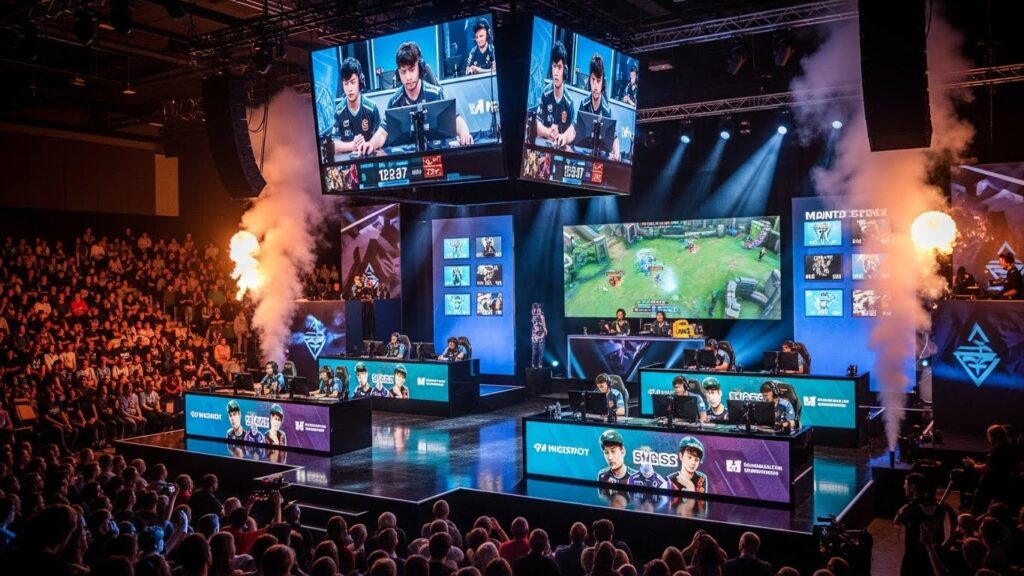
In recent years, esports has transitioned from a niche hobby to a global entertainment powerhouse. Once confined to small gatherings of dedicated gamers, it now fills massive arenas, broadcasts to millions online, and generates revenue rivaling traditional sports. The evolution of esports is not just a story of technological advancement; it is a cultural phenomenon, reshaping how people engage with competition, community, and digital entertainment. This blog explores the journey of esports, its impact, challenges, and the promising future that lies ahead.
The Origins of Competitive Gaming
Competitive gaming can trace its roots back to the earliest days of video games. In arcades, players competed for high scores on games such as Pac-Man, Donkey Kong, and Space Invaders. These small competitions, while informal, set the stage for organized play. By the 1980s and 1990s, gaming tournaments began to emerge, often at universities or local gaming clubs. Titles like Street Fighter and Super Mario Bros. attracted players eager to prove their skills, laying the groundwork for competitive gaming as we know it today.
The introduction of personal computers and home consoles expanded the possibilities. Games like StarCraft, Quake, and Counter-Strike allowed players from around the world to compete online. Early online tournaments may have been modest, but they created a blueprint for the professional competitions that dominate the industry today.
The Birth of Modern Esports
The 2000s marked the true emergence of esports as a professional endeavor. During this era, professional teams formed, tournaments began offering prize money, and sponsors started to take notice. Multiplayer online battle arenas and strategy games became the foundation of professional competition.
Esports organizations started to resemble traditional sports teams, with coaches, analysts, and management staff. This professionalization brought structure and legitimacy, transforming gaming from a hobby into a potential career path. As leagues became more organized and prize pools increased, esports began to capture mainstream attention.
Streaming and Its Transformational Impact
The rise of streaming platforms revolutionized esports. Platforms like Twitch and other live streaming services allowed fans to watch games in real time, interact with players, and follow tournaments from anywhere in the world. This accessibility fueled exponential growth in esports audiences.
Streaming created communities where fans could connect, discuss strategies, and celebrate their favorite players. Unlike traditional sports broadcasting, streaming provided a direct connection between players and their fans. This community-driven model fostered loyalty and engagement, helping esports become a dominant form of digital entertainment.
Professional Teams and Leagues
As visibility grew, professional esports teams and leagues became more structured. Teams adopted rigorous training schedules, employed coaches, analysts, and support staff, and developed strategies similar to those seen in traditional sports.
Major leagues introduced season formats, branded merchandise, and consistent schedules. Franchise-based systems attracted investment from entertainment companies, sports organizations, and celebrities. These developments elevated the industry, allowing tournaments to take place in large arenas with high production values and global audiences.
Cultural Significance of Esports
Esports has had a profound impact on culture, particularly among younger generations. It has redefined what it means to be an athlete, emphasizing mental agility, quick reflexes, and strategic thinking over physical strength. The dedication required mirrors that of traditional sports, challenging stereotypes about gamers.
Esports has also influenced fashion, music, and entertainment. Gaming-themed apparel, music collaborations, and appearances of esports personalities in mainstream media demonstrate its integration into popular culture. The digital-native audience of esports aligns perfectly with trends in social media, streaming, and online interaction, making it a culturally relevant force.
Technological Advancements Driving Growth
Technology has been a critical driver of esports. High-speed internet, advanced gaming hardware, and sophisticated game engines have made competition more engaging and accessible. In-game spectator modes allow viewers to switch perspectives, review replays, and analyze plays in real time.
Broadcasting innovations, including augmented reality and virtual production, have turned tournaments into visually stunning events. These advancements make esports not just a game but a compelling spectator experience that rivals traditional sports broadcasts.
The Economics of Esports
Esports has developed a robust economic ecosystem. Revenue comes from sponsorships, advertising, merchandise, ticket sales, and media rights. Professional players can earn significant income through tournament winnings, salaries, and personal branding opportunities.
Brands see esports as a gateway to a young, tech-savvy audience. Non-gaming companies, including technology firms, automotive brands, and beverage companies, invest heavily in esports marketing. Universities have also embraced esports, offering scholarships, dedicated facilities, and academic programs related to gaming, further cementing its economic significance.
Career Opportunities in Esports
The rise of esports has created diverse career paths. Beyond professional players, the industry employs commentators, coaches, analysts, event organizers, content creators, designers, and marketing professionals.
Esports academies and training programs help aspiring players develop skills, both in gameplay and professional conduct. These structured pathways make the industry more accessible and sustainable, demonstrating that esports is more than just a game—it is a potential lifelong career.
Challenges in the Esports Industry
Despite its growth, esports faces several challenges. Player burnout is a major concern, as long hours of training and intense competition can negatively impact mental health. Creating support systems and wellness programs is essential for the longevity of professional players.
Maintaining competitive integrity is another issue. Cheating, match-fixing, and security risks threaten the credibility of tournaments. Strong governance, anti-cheat technologies, and transparent regulations are crucial to protect the integrity of esports.
Monetizing the global audience consistently remains a challenge. While the fan base is enormous, developing sustainable revenue models for players, teams, and event organizers is critical for continued growth.
Esports and Education
Esports has also found a place in education. Schools and universities have developed programs that emphasize teamwork, leadership, communication, and strategic thinking. Clubs and competitions provide students with a structured environment to hone skills and engage in digital communities.
Some institutions integrate esports into STEM education, using gaming to teach coding, physics, and digital literacy. This educational angle helps shift perceptions of gaming from leisure to a valuable skill-building activity.
Global Reach of Esports
Esports is a truly global phenomenon. International tournaments feature players from all corners of the world, and fans connect across cultures through their shared love of games. Regions such as South Korea, China, and North America have become esports hubs, producing top-tier talent and nurturing large fan bases.
The international appeal of esports highlights its ability to transcend borders. Language and location are no longer barriers, making esports a unifying form of entertainment that connects millions of people worldwide.
The Future of Esports
The future of esports looks bright and full of innovation. Virtual reality competitions, advanced analytics, and immersive fan experiences may redefine how games are played and watched. Mobile esports is emerging as a significant growth area, making competitive gaming more accessible to audiences worldwide.
Esports may increasingly integrate with traditional sports, offering hybrid events or crossover tournaments. As younger generations grow up with gaming as a core part of their lives, the future fan base will continue to expand, ensuring esports remains a dominant cultural and entertainment force.
Conclusion
Esports has evolved far beyond its humble beginnings. It is now a dynamic ecosystem that blends technology, competition, entertainment, and community. The journey from local arcades to global arenas illustrates the potential of digital innovation and human creativity.
With growing cultural relevance, economic impact, and technological integration, esports is here to stay. It challenges traditional definitions of sports, inspires new career paths, and connects people across the globe. As esports continues to evolve, it promises to remain a defining force in the digital age, proving that the passion, skill, and dedication of gamers are just as compelling as any traditional athletic pursuit.



More Stories
Pixels to Podiums: The Evolution of Esports in the Modern Era
Pixels to Powerhouses: How Esports Redefined Competition in the Digital Age
Pixels to Powerhouses: How Esports Redefined Competition in the Digital Age