Introduction
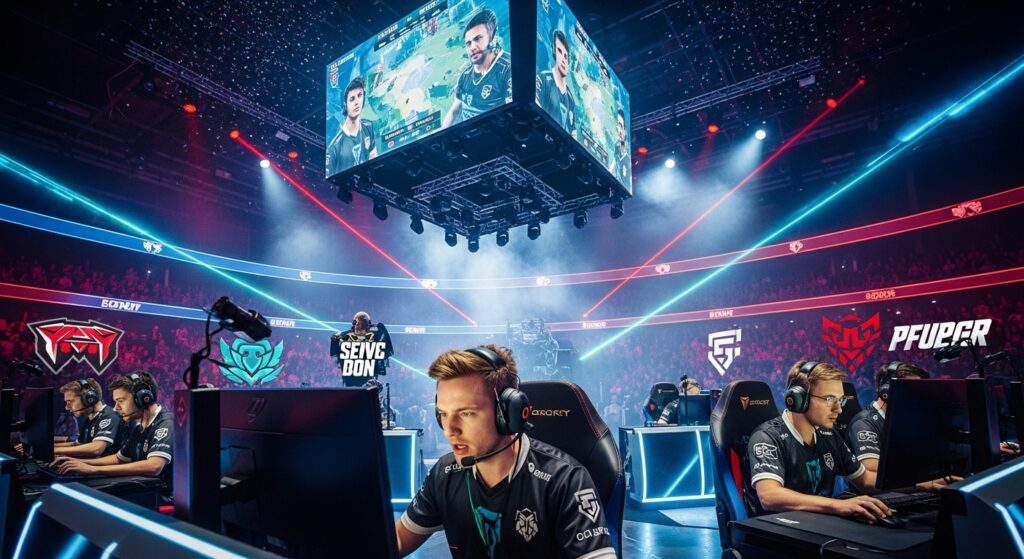
In the last decade, eSports has emerged from its niche beginnings into a global powerhouse. Once considered a subculture of gaming enthusiasts, competitive gaming now attracts millions of viewers, top-tier sponsorships, and even mainstream media coverage. The rapid growth of eSports has transformed how we think about sports, entertainment, and even community. This blog post will take a deep dive into the world of eSports, exploring its origins, rise to prominence, economic impact, and cultural significance, while also looking at what the future may hold for this digital phenomenon.
The Origins of eSports: From Arcades to Online Competitions
The roots of eSports can be traced back to the 1970s and 1980s when arcade games like Pong and Space Invaders introduced the concept of competition through gaming. However, the true seeds of eSports were sown during the rise of personal computing and the internet in the 1990s. Games like Quake, StarCraft, and Warcraft III introduced multiplayer modes that allowed players to compete against one another across local area networks (LAN) and later over the internet.
In the early days of competitive gaming, events were usually small, local gatherings organized by gaming communities or internet cafes. Players would often come together to compete for bragging rights, but these competitions lacked the scale and structure we now associate with professional eSports. However, as gaming technology improved and internet speeds became faster, the idea of organized, large-scale competitions started to take root. The formation of the World Cyber Games in 2000 and the Electronic Sports World Cup in 2003 marked the beginning of competitive gaming as a global phenomenon. These early tournaments set the stage for the major eSports events that we see today.
The Rise of eSports: A Global Spectacle
By the mid-2000s, competitive gaming began to grow beyond small community events. Professional eSports organizations began forming, and the first professional eSports leagues were established. One of the key milestones in the rise of eSports came with the launch of League of Legends in 2009. Developed by Riot Games, League of Legends revolutionized the competitive gaming scene, creating an entire ecosystem built around its world-class competition. The game’s free-to-play model and continuous updates kept players engaged, while its professional leagues offered substantial prize pools and global recognition.
Alongside League of Legends, other games like Dota 2, Counter-Strike: Global Offensive, and Overwatch began to gain traction as the backbone of the eSports industry. Major tournaments such as The International (for Dota 2) and Intel Extreme Masters (for Counter-Strike) attracted huge audiences and prize pools, establishing competitive gaming as a legitimate and highly profitable entertainment sector.
The rise of streaming platforms like Twitch and YouTube Gaming also played a pivotal role in the global expansion of eSports. For the first time, fans could watch live tournaments from anywhere in the world, interact with their favorite players in real time, and immerse themselves in the growing eSports culture. Twitch, in particular, became synonymous with eSports broadcasting, with millions of viewers tuning in daily to watch professional players compete and chat with streamers.
The Professionalization of eSports: A New Career Path
What was once a hobby has now evolved into a full-time career for many professional gamers. Just like athletes in traditional sports, eSports players now sign contracts, receive salaries, and compete in high-stakes tournaments with massive prize pools. Professional eSports organizations function similarly to traditional sports teams, with dedicated coaching staff, analysts, and support teams who help players maximize their potential.
One of the hallmarks of the professionalization of eSports is the establishment of leagues and franchises. Games like League of Legends and Overwatch have adopted a franchise-based model, where teams compete in regular seasons and playoffs, much like in traditional sports leagues. These franchise leagues bring structure and stability to the eSports ecosystem, with teams committing to long-term contracts and players becoming household names. For example, the League of Legends Championship Series (LCS) has grown into one of the most respected professional gaming leagues, with teams like TSM, Cloud9, and Team Liquid becoming internationally recognized brands.
With professionalization comes increased visibility. Top players now earn substantial incomes from tournament winnings, sponsorships, merchandise sales, and streaming. Some players, such as Faker from League of Legends and s1mple from Counter-Strike: Global Offensive, have become icons of eSports, amassing millions of followers on social media and commanding lucrative endorsement deals with global brands. The rise of the professional gamer has not only changed how people perceive competitive gaming but also provided a clear career path for those looking to turn their passion for gaming into a viable profession.
eSports and the Media: From Niche to Mainstream
One of the most significant factors driving the rise of eSports is its ability to attract mass media attention. Once relegated to the fringes of the gaming world, eSports has now captured the interest of traditional media outlets, broadcasters, and even mainstream sports networks. Major events like The International, League of Legends World Championship, and Overwatch League Finals are now broadcast on platforms like ESPN, TBS, and even prime-time television.
The increasing media presence of eSports has contributed to its legitimacy as a form of entertainment. eSports’ recognition by mainstream sports media networks has opened up new avenues for broadcasting and sponsorships. It has also allowed the industry to reach audiences beyond the traditional gaming community. eSports is no longer just for gamers; it has become a form of entertainment that appeals to people from all walks of life.
Additionally, streaming platforms like Twitch, YouTube, and Facebook Gaming have become critical in bringing eSports to the masses. The ability to watch eSports events live, without geographic restrictions, has made it possible for fans from around the world to tune in to their favorite tournaments. Many viewers also enjoy watching live streams of players practicing, providing them with an intimate connection to the games and players they support.
The Economic Impact of eSports
eSports is not only a global cultural phenomenon; it is also an economic juggernaut. The financial impact of eSports extends far beyond player salaries and prize pools. Revenue streams for eSports organizations come from sponsorships, merchandise, advertising, broadcasting rights, and live event ticket sales. According to industry reports, the global eSports industry is projected to generate over a billion dollars in revenue annually, with a significant portion coming from sponsorship deals with major brands like Coca-Cola, Intel, and Red Bull.
The economic impact of eSports is also evident in the rise of dedicated eSports arenas. These purpose-built venues host live tournaments and events, offering fans the chance to experience the excitement of competitive gaming in person. For example, the League of Legends World Championship is held in massive stadiums and arenas around the world, with tickets selling out quickly and thousands of fans attending to watch the competition unfold.
Moreover, the success of eSports has led to the creation of new jobs and industries. In addition to players, professional eSports organizations now employ coaches, analysts, content creators, broadcasters, and event organizers. The rise of eSports has also spurred the growth of related industries, such as game development, gaming hardware, and event production.
The Social Aspect of eSports: Building Communities
While the competitive nature of eSports is a central draw, its social aspect is equally important. eSports provides a unique platform for people to connect and share experiences. Fans can interact with players during live streams, participate in online communities, and join discussions about their favorite games and teams. The rise of online forums, social media groups, and fan sites has allowed eSports to foster a sense of community and belonging for people who share a passion for gaming.
The social component of eSports has also extended to the professional scene. Many top-tier players have large followings on social media platforms like Twitter, Instagram, and YouTube, where they engage with their fans, share behind-the-scenes content, and provide insights into their personal lives. This level of engagement creates a deeper connection between players and their fans, making eSports not just a sport to watch but a lifestyle to follow.
In addition to online communities, eSports also creates social opportunities for players and fans through live events and tournaments. Fans gather at large-scale events to watch live competitions, meet their favorite players, and celebrate their shared love for gaming. The shared experience of attending an eSports event creates lasting memories and strengthens the sense of community.
The Future of eSports: Endless Possibilities
As eSports continues to evolve, its future is filled with exciting possibilities. With technological advancements such as virtual reality (VR) and augmented reality (AR) becoming increasingly sophisticated, the way players and fans experience eSports will continue to change. VR technology, for example, could offer players a more immersive and interactive experience, while AR could revolutionize how fans watch eSports events by overlaying digital content in the physical world.
The mobile gaming market is another area of growth for eSports. As smartphones and tablets become more powerful, mobile gaming tournaments are gaining popularity, particularly in regions where console and PC gaming is less accessible. Games like PUBG Mobile, Clash Royale, and Mobile Legends have proven that eSports can thrive on mobile platforms, and this trend is expected to grow in the coming years.
As eSports becomes even more mainstream, it will likely attract further investment from traditional sports organizations and major corporations. Traditional sports teams and athletes have already begun to show interest in eSports, with NBA teams and football clubs investing in eSports organizations. This integration of traditional sports and eSports is expected to become more pronounced, leading to a future where competitive gaming and traditional sports exist in tandem, appealing to a broader audience.


More Stories
Pixels to Podiums: The Evolution of Esports in the Modern Era
Pixels to Powerhouses: How Esports Redefined Competition in the Digital Age
Pixels to Powerhouses: How Esports Redefined Competition in the Digital Age